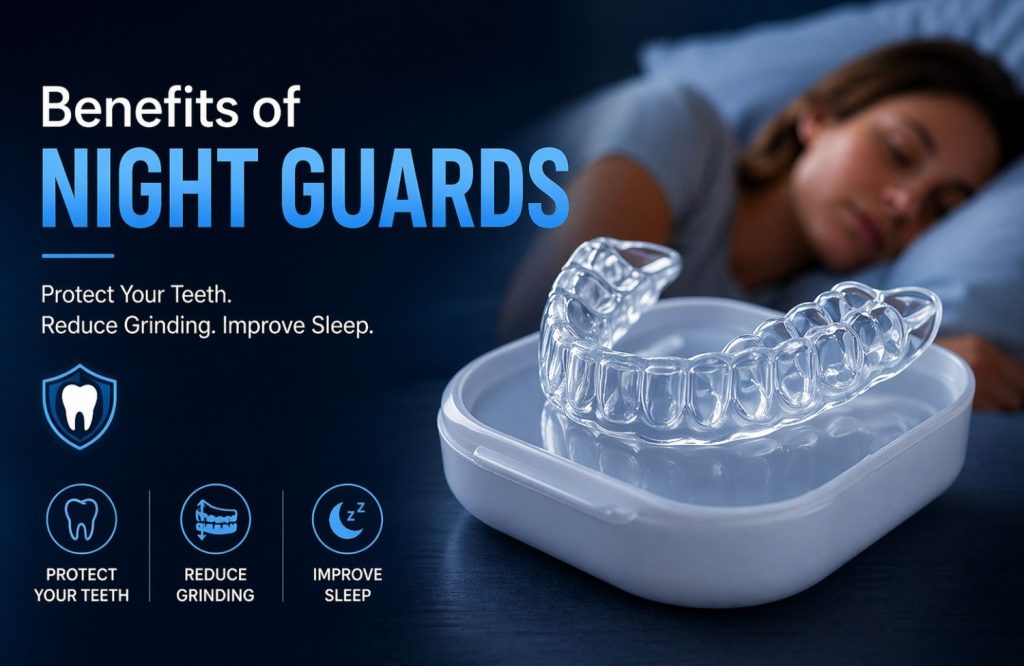
Teeth grinding usually doesn’t announce itself.
It happens during sleep, without any clear signal at the time. The effects tend to show up later, often in ways that don’t immediately point to the cause.
A tight feeling in the jaw, slight discomfort in the morning, or sensitivity that wasn’t there before. Each on its own can feel unrelated.
Over time, those changes begin to connect. The pressure placed on the teeth during the night starts to leave a visible and physical impact.
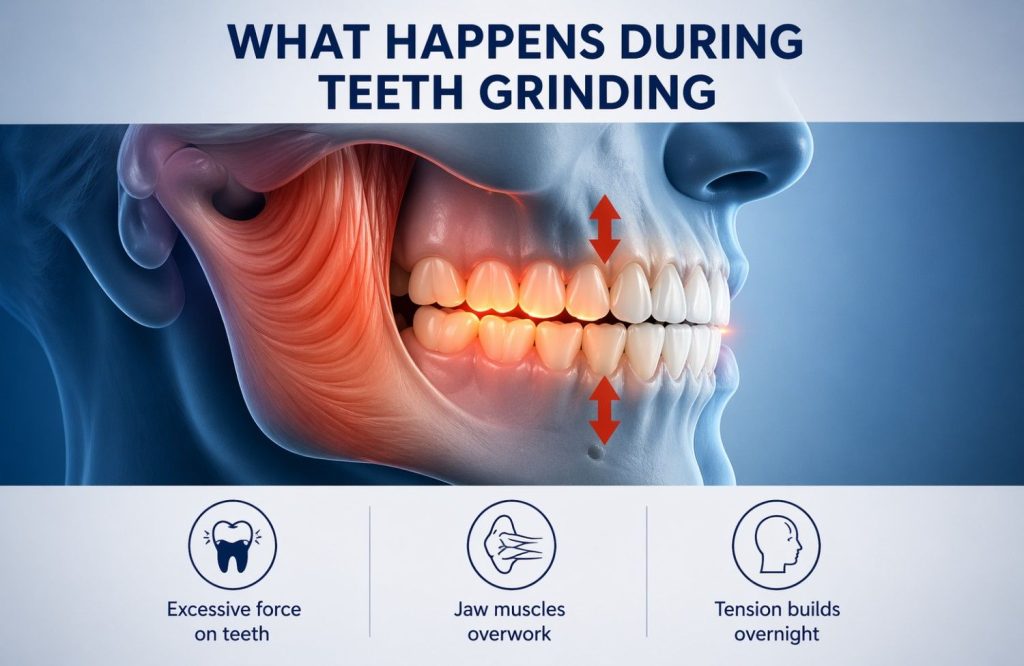
Grinding does not happen in a controlled way.
The teeth come into contact with more force than they are meant to handle, often for longer than a normal bite would last. It’s not a single movement. It can repeat, or continue for short periods without interruption.
The pressure is not evenly distributed. Certain areas take more of it, especially where the teeth meet first. Over time, those points begin to show the effect.
The jaw is involved as well. Muscles stay active when they are supposed to be at rest. That tension carries through the night, even without being noticed.
By the time morning comes, the teeth and jaw have already gone through repeated strain.
Signs That Are Often Overlooked
The signs are not always obvious.
A slight tightness in the jaw in the morning can pass within minutes, so it rarely stands out. It feels like stiffness, not something linked to the teeth.
There can also be small changes along the edges of the teeth. Nothing dramatic at first, just a difference in how they feel when the tongue runs across them.
Some people notice sensitivity without a clear reason. Cold or pressure starts to feel different, even though nothing in the routine has changed.
Each of these on its own can seem minor. It’s only when they start to repeat that the pattern becomes clearer.
How Grinding Affects Teeth and Jaw Over Time
The effect doesn’t show all at once.
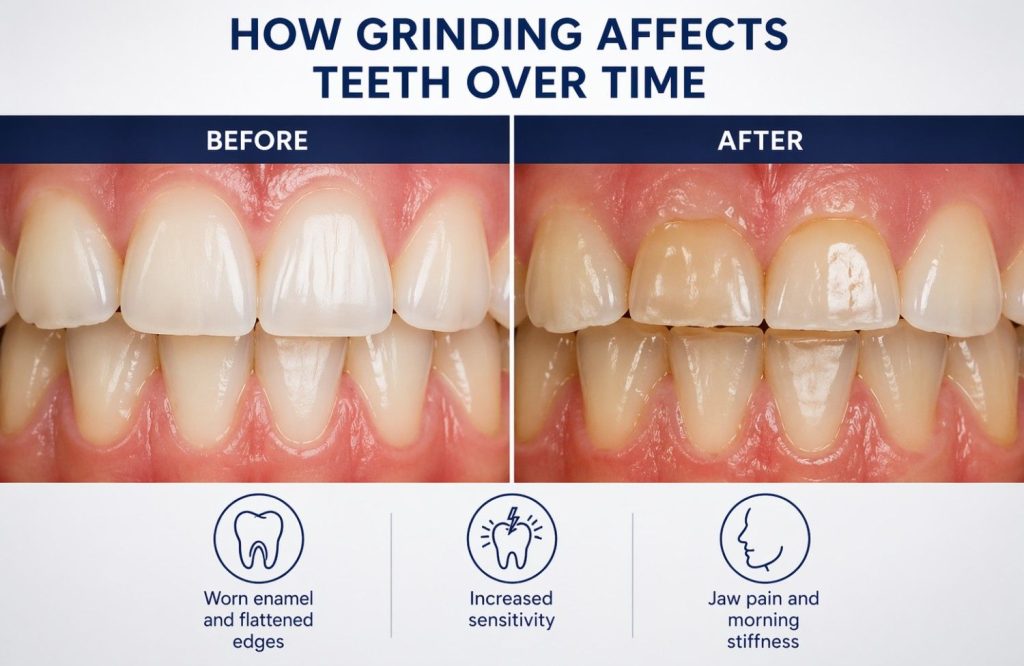
At first, the changes are subtle. The edges of the teeth begin to feel slightly different, not as sharp or defined as before. It’s easy to overlook unless attention is drawn to it.
With time, the surface starts to wear. The contact between teeth becomes flatter in certain areas, and the natural shape begins to change.
The jaw is affected alongside it. Tension that was occasional becomes more familiar, especially in the morning or after periods of rest.
As the pattern continues, the impact is no longer limited to one area. Teeth and jaw begin to respond together, and the strain becomes part of the daily routine rather than an isolated event.
Where a Night Guard Makes a Difference
The change begins when the contact between the teeth is no longer direct.
Instead of one surface pressing against another, there is a layer in between that absorbs part of that force. The pressure is still there, but it no longer falls on the same points in the same way.
That shift reduces how much the teeth wear against each other during the night. The edges are not exposed to the same repeated contact, and the surface is less affected over time.
The jaw responds differently as well. When the force is distributed more evenly, the tension does not build in the same way as before.
It doesn’t stop the habit itself. What changes is the impact it leaves behind.
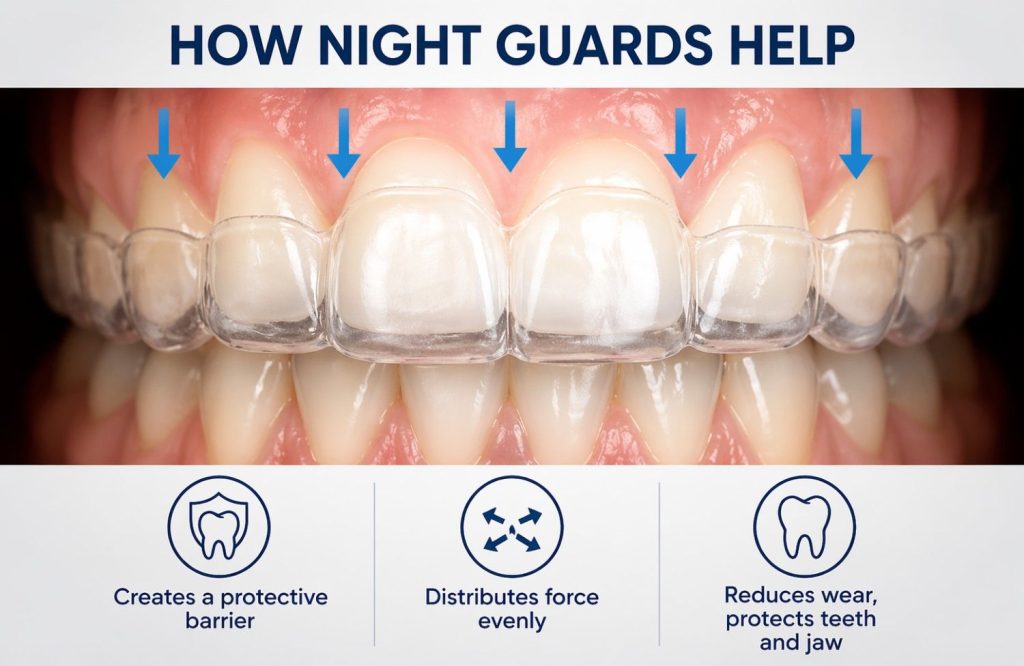
The difference is not only in what is reduced, but in how the teeth and jaw respond over time.
With that layer in place, the contact no longer affects the same areas repeatedly. The surface is not exposed in the same way night after night.
Small changes begin to show first. The edges stop wearing at the same rate. Sensitivity does not increase in the same pattern as before.
The jaw also settles differently. The tension that used to carry into the morning doesn’t build in the same way when the pressure is absorbed rather than transferred directly.
Nothing changes overnight. The effect is gradual, but more controlled compared to the pattern without it.
When a Night Guard Becomes Necessary
It’s not always a single symptom that leads to it.
More often, it becomes clear through repetition. The same areas of discomfort return, or the same patterns continue without changing.
What starts as something occasional begins to settle into a routine. Morning tightness, sensitivity, or uneven contact between teeth no longer feels temporary.
In some cases, the change is visible. The edges of the teeth don’t look the same, or certain spots begin to wear more than others.
At that point, it’s less about noticing isolated signs and more about recognizing a pattern that continues without improving.
Treatment Option
When the pattern continues without change, the focus shifts from managing the effects to limiting the impact.
At that stage, the goal is not to stop the habit itself, but to reduce how much strain it places on the teeth and jaw during the night.
A night guard creates that separation. It changes how the pressure is distributed and prevents the same areas from taking repeated force.
In such cases, a custom night guard can help protect the teeth and reduce pressure during sleep
Closing
Changes from grinding don’t always stand out at first.
What matters is how they continue. When the pattern stays the same or becomes more noticeable over time, the impact tends to follow.