You might notice it in a photo first. Not something obvious, but enough to make you pause for a second.
Later, it comes up during a routine dental visit. Alignment, spacing, bite. Nothing urgent, but not something to ignore either.
From there, the question starts to build quietly.
Should I actually fix this?
That question often leads to a deeper one do you really need braces for your teeth condition, or is it something that can be left as it is?
That’s usually when you begin looking into options. Braces come up. Then Invisalign. And before long, you’re trying to understand which one makes more sense for you, not just in theory, but in real life.
What Are Braces?
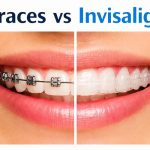
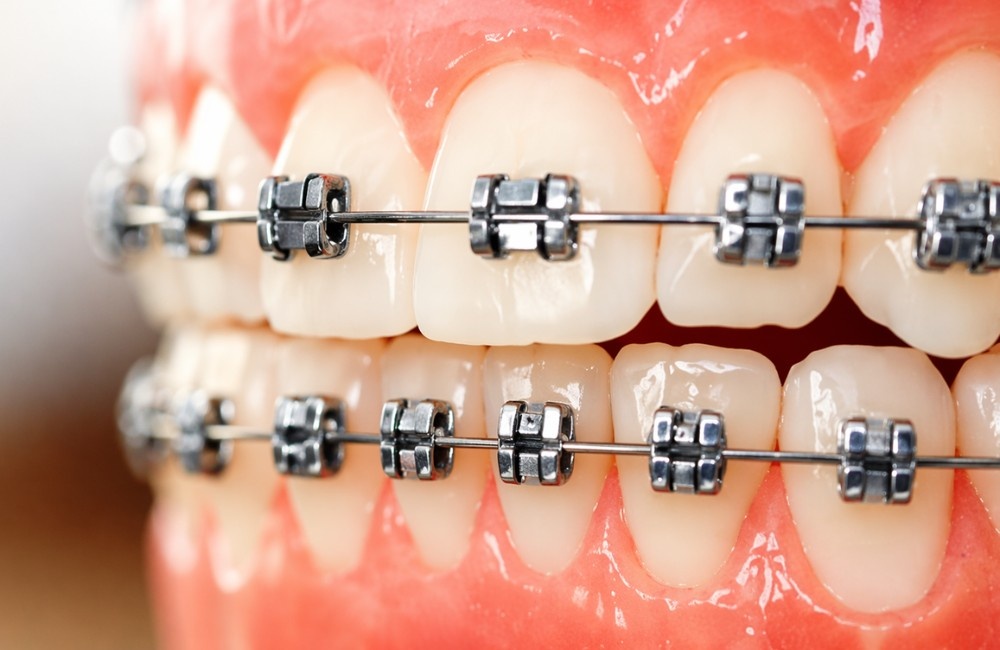
Braces are a fixed treatment used to correct the position of teeth over time.
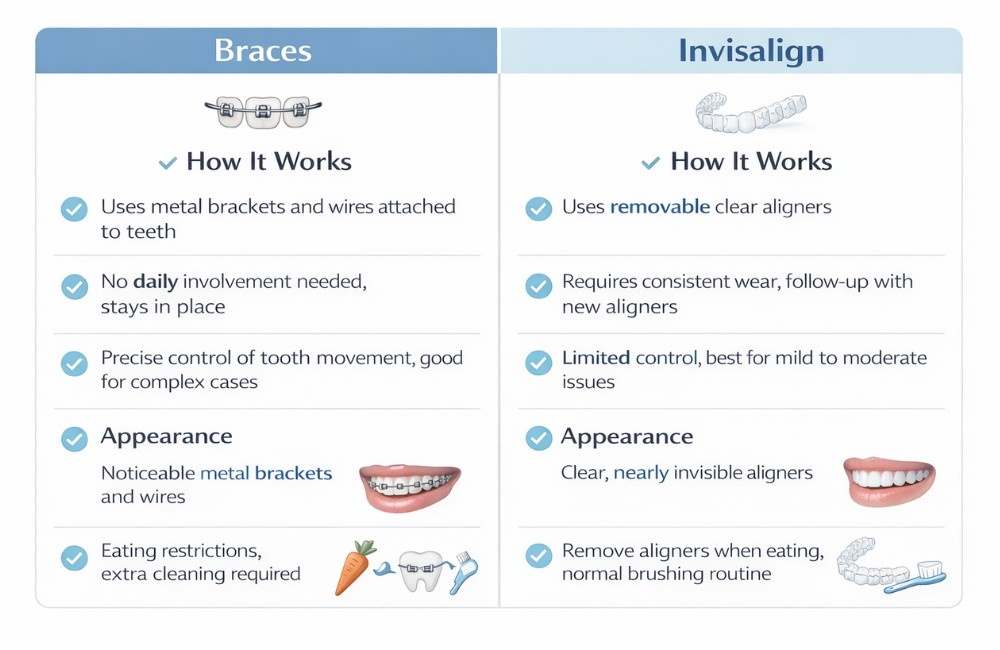
Small brackets are attached to the surface of each tooth and connected with a wire. That wire is adjusted at intervals, applying controlled pressure to place the teeth into alignment.
Tooth movement is created by applying controlled force through the wire. Each adjustment places pressure on specific teeth and shifts them toward the planned position.
The system remains fixed, so each adjustment produces a predictable change. Complex alignment and bite correction require precise control during each adjustment.
Daily habits do change during treatment.
Certain foods become difficult to manage, especially in the beginning. Cleaning also takes more time, since the brackets create additional areas where plaque can build up.
With time, these adjustments become routine. Most patients settle into it once they understand what to expect.
If you’re considering braces, it also helps to understand the types-of-braces and how braces treatment actually works from start to finish.
What Is Invisalign?
Invisalign is a teeth-straightening method that uses clear, removable aligners instead of fixed brackets and wires.
Each aligner is custom-made to fit your teeth closely. A new set is introduced every one to two weeks, with each stage designed to move specific teeth in a controlled sequence.
The aligners remain in place for most of the day and are removed only during meals and oral hygiene. This allows you to maintain normal eating habits and routine brushing without additional restrictions.
Because the system is removable, treatment depends on consistent wear. Skipping hours or removing aligners frequently can delay progress and affect results.
Patients who follow the schedule closely usually adapt within the first few weeks. Once the routine is established, the process becomes easier to manage, particularly for those who prefer a less visible option during treatment.
Differences Between Braces and Invisalign
Which Option Is Right for You?
A clinical assessment is what determines the approach.
It shows how much movement is needed, how long it may take, and which option fits the case.
If you’re unsure where to start, speaking with an experienced specialist can make things clearer. A consultation with an orthodontist-abu-dhabi for braces or Invisalign treatment helps you understand exactly what your teeth require and which option is more suitable for your situation.
You can explore both options in more detail at Invisalign treatment information and how braces treatment is carried out step by step.
Treatment Time: Is There a Difference?
Treatment time depends on how much movement is required.
Cases involving minor alignment can be completed in a shorter period. More complex corrections, especially those involving bite changes, take longer regardless of the method used.
Braces are often used in situations where movement needs to be more controlled. In those cases, treatment may extend over a longer duration.
Invisalign can be quicker in simpler cases, but only when the aligners are worn as prescribed. Inconsistent use can delay progress and extend the timeline.
The type of treatment does influence duration, but it is not the only factor. The condition of the teeth and how closely the plan is followed both affect the outcome.
A proper assessment provides a more accurate estimate based on the specific case.
Making the Right Decision
At this stage, the difference is already clear.
What remains is how it fits you.
Some patients prefer a fixed approach that runs on its own. Others are comfortable managing something removable, as long as it stays consistent.
Neither choice is automatic. It depends on how you want to go through the process, not just the result.
The clinical side sets the limits. The rest comes down to preference and routine.
If there’s still uncertainty, that’s expected. Most decisions are not made from reading alone.
A consultation usually answers what written information cannot. It shows what applies to your case, not just what works in general.
Let’s Help You Decide
If you’ve reached this point, you probably already have a sense of which direction feels more suitable.
Still, it’s not always easy to decide based on general information alone.
An in-person consultation gives a clearer picture. It allows the condition of your teeth to be assessed properly, and the options can be explained in a way that relates directly to your case.
There’s no need to rush the process. Taking the time to understand what works best usually leads to a more comfortable and predictable outcome.