Brushing twice a day is common. For many, that feels like enough.
But brushing alone does not cover everything. Areas between the teeth are missed.
Certain surfaces are cleaned quickly and unevenly. (For a quick-reference version, see our daily habits for healthier teeth and gums.)
Over time, those gaps in the routine begin to show. Not immediately, but gradually through plaque buildup or early gum irritation.
A complete routine depends on how well each step is done and how consistently it is followed.
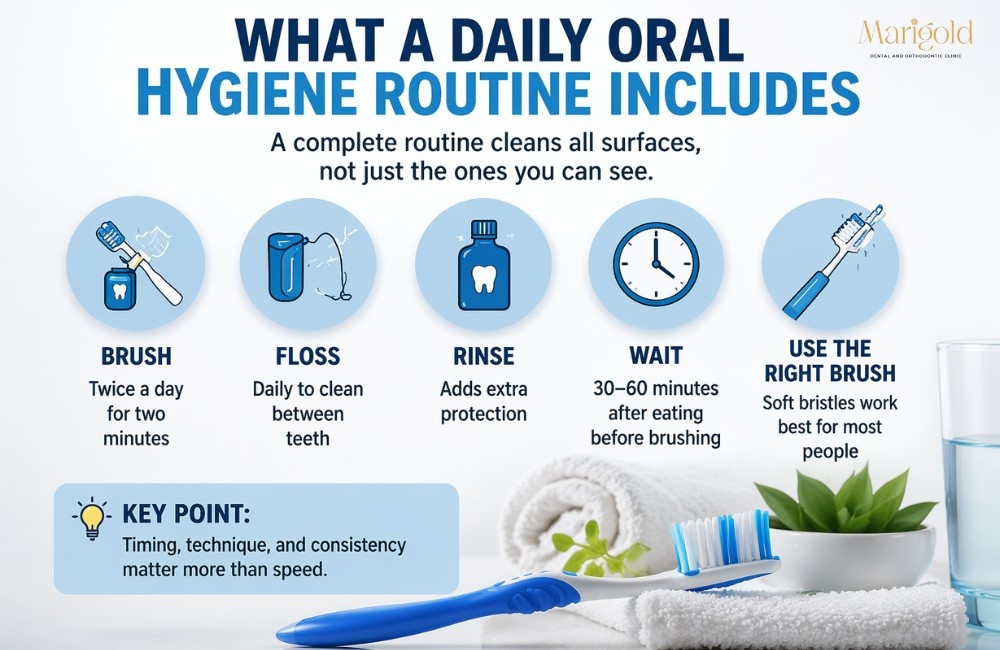
What a Daily Oral Hygiene Routine Includes
Brushing is often treated as the routine. In reality, it leaves out areas that a toothbrush cannot reach.
Plaque does not build evenly. It collects between teeth, along the gum line, and in spots that can be easily ignored unless attention is given.
Timing is one crucial factor that is often overlooked. Experts suggest not brushing immediately after eating. Brushing straight after food, especially acidic foods or drinks, can affect enamel. Waiting for an hour can provide sufficient cleaning with ease.
Technique is inconsistent in most cases. Areas that are more exposed are brushed more easily, while hidden or uneven areas are often skipped without notice or in a hurry.
A routine only works when all surfaces are cleaned properly, including the less visible ones. Brushes with varying bristle density are available. Use a soft brush or choose one based on your comfort level.
How the Routine Differs Between Morning and Night
A routine usually settles into two parts of the day. Morning and night, but they are not identical.
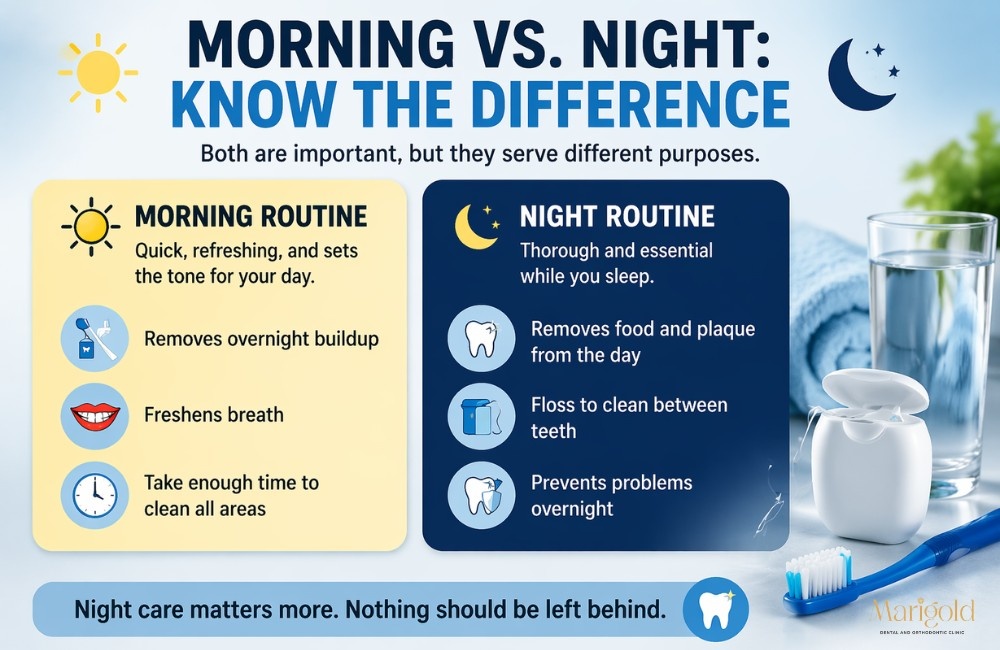
Morning brushing is often quicker. It helps remove buildup from overnight and freshens the mouth before the day starts — an important part of preventing bad breath as the day begins. The focus here is basic cleaning, but it still needs enough time to cover all areas, not just the front teeth.
Night care matters more than most people assume. Food particles and plaque left behind stay in place for hours during sleep. That makes thorough cleaning at night more important than speed.
Flossing fits better into the evening routine. It reaches areas that brushing misses, especially between teeth where buildup is more likely to stay undisturbed.
Rinsing can help, but it does not replace brushing or flossing. It works as an addition, not a substitute.
What matters most is not adding more steps, but doing the routine without rushing through it or skipping the less visible areas.
Common Mistakes in Daily Oral Hygiene
Even with a regular routine, a few things are often left out or done without much attention.
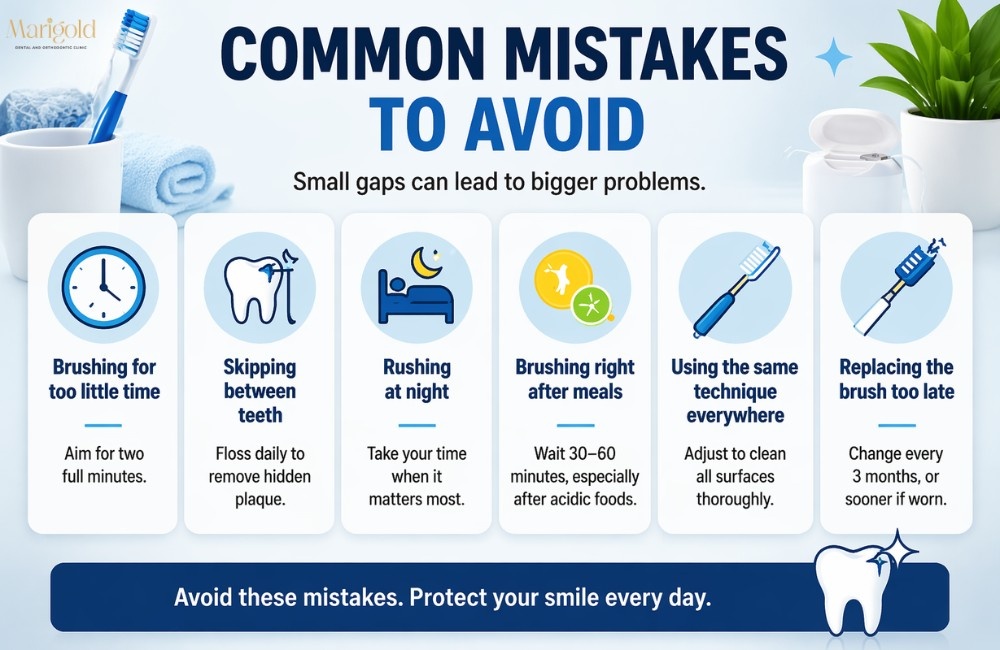
Brushing for too little time
A quick pass over the teeth feels sufficient, but certain areas don’t get cleaned properly. Back teeth and inner surfaces are often missed.
Skipping between the teeth
Brushing alone does not reach the spaces between teeth. Without flossing, buildup stays in place, even if the visible surfaces look clean.
Rushing at night
Cleaning at the end of the day is often done quickly. Fatigue plays a role, and parts of the routine get shortened or skipped.
Brushing right after meals
Especially after acidic food or drinks. Enamel is more vulnerable at that point, and brushing immediately can cause damage.
Using the same technique everywhere
Teeth are not aligned the same way. Some areas need more attention, but the same motion is repeated across all surfaces.
Replacing the brush too late
Worn bristles lose effectiveness. Cleaning becomes less thorough even if the routine stays the same.
Limits of a Daily Oral Hygiene Routine
A consistent routine keeps the teeth clean superficially, but it does not always reveal what is happening behind the surface.
Plaque can harden in areas that are not easy to clean during daily care. Early signs of gum disease or decay may remain invisible until they begin to develop.
Most problems develop without any known symptoms. There is no discomfort in the early stages, and the routine continues as usual without any indication that something is changing.
Some changes are not visible during daily care. Early decay, gum inflammation, or buildup below the surface can go unnoticed without a proper examination.
Regular dental checkups help detect these issues early and allow timely treatment.
A routine works best when it is consistent and done with attention.
Small gaps in daily life can be missed easily and tend to develop with the time being. Keeping the routine complete, along with periodic checkups, helps maintain long-term oral health.