What Dental Veneers Actually Are
A veneer is a thin shell bonded to the front surface of a tooth. It changes how the tooth looks without replacing the tooth itself. Veneers correct colour, shape, minor gaps, and the appearance of alignment, all without moving teeth orthodontically.
Most veneer cases treat six to ten teeth across the visible smile. A single veneer on one tooth is possible but less common. Matching one new surface to naturally aged teeth beside it is harder to do convincingly.
Porcelain, E-Max, and Composite Veneers: The Real Trade-Offs
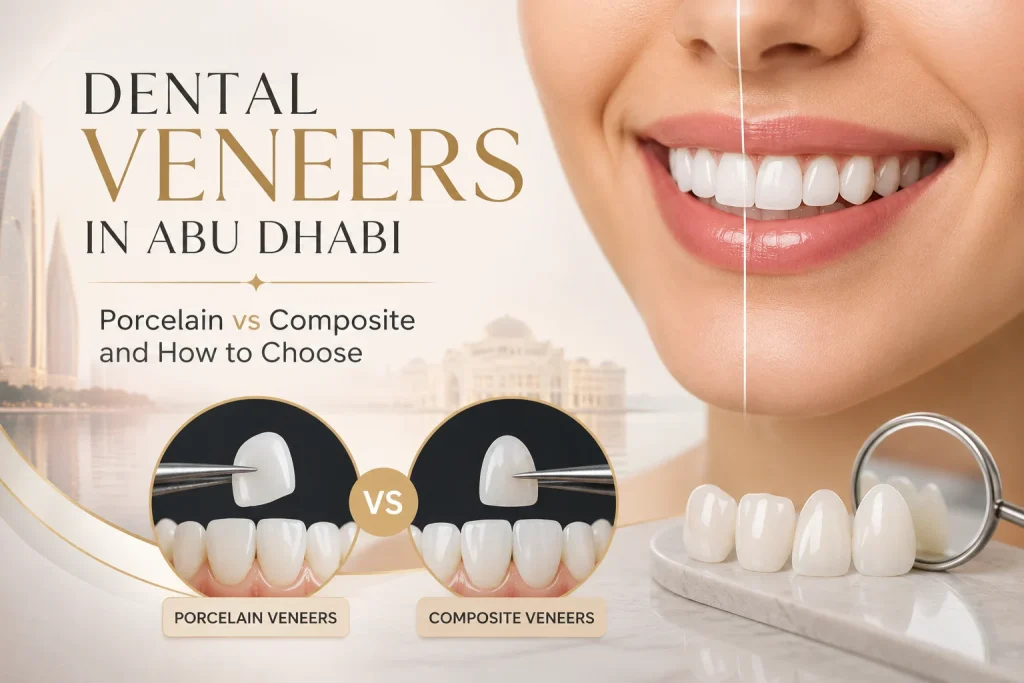
Porcelain and E-Max veneers require removing a thin layer of enamel, typically around half a millimeter. That enamel does not grow back. Once it’s removed, the tooth needs some form of covering permanently, whether a veneer or eventually a crown.
Composite veneers usually need little to no enamel removal. The resin builds onto the existing tooth surface rather than replacing part of it. This keeps composite veneers considerably more reversible than porcelain.
Durability runs in the opposite direction. Porcelain and E-Max typically last ten to twenty years. Composite typically lasts five to seven years before it needs refinishing. Porcelain also resists staining better over that longer lifespan.
The decision comes down to a genuine trade-off. Porcelain offers permanence and longevity at the cost of an irreversible step. Composite offers reversibility and a lower upfront cost at the cost of a shorter lifespan.
When a Crown Is the Better Fit Instead of a Veneer
Veneers cover only the front surface of a tooth. A crown covers the entire tooth, front, back, and biting surface. This coverage difference decides which one actually solves a given problem.
A tooth with significant structural damage or extensive decay usually needs a crown rather than a veneer. So does a tooth with a large existing filling. Teeth that have had root canal treatment often need a crown too, since root-canalled teeth tend to be more brittle and need fuller coverage. Our guide on the different types of dental crowns explains when a crown is the more appropriate choice.
Veneers work well on teeth that are structurally healthy but cosmetically imperfect. The distinction is about how much of the tooth actually needs covering, not about which option looks better.
Veneers or Composite Bonding: How to Tell Which One Fits Your Case
Composite bonding handles small, isolated corrections well. A single chip or a small gap on an otherwise healthy tooth is a strong case for bonding. Minor edge unevenness fits the same category. Our composite bonding page covers exactly what bonding can and can’t address.
Veneers become the better option once the case grows beyond what bonding can realistically fix. Internal tooth discolouration, the kind bonding can’t lighten, often responds well to a veneer’s opaque coverage. Real misalignment across several teeth, which bonding can’t correct, is something veneers can visually address without orthodontic movement. Heavy grinding, which wears composite down faster than porcelain, is another reason patients move toward veneers for a longer-lasting result.
The clearest signal is scope. One or two small corrections point toward bonding. A coordinated change across several teeth points toward veneers. When veneers are planned as part of a complete smile transformation, they often become one element of a Hollywood Smile treatment.
Veneer Cost in Abu Dhabi and What Drives the Price
Three things drive the price: material, the number of teeth treated, and whether extra work like whitening or gum reshaping gets added. Composite veneers cost less per tooth than porcelain or E-Max. A full set of porcelain veneers across six to ten teeth commonly reaches into the tens of thousands of dirhams.
Insurance rarely covers this. Thiqa, Daman, AXA, ADNIC, NAS, and Neuron UAE plans generally treat veneers as elective cosmetic treatment, excluded from standard coverage.
An accurate treatment plan and quote depend on an in-person assessment, since bite alignment and existing tooth condition affect the final recommendation. Marigold Dental’s consultation process is built around giving that number honestly upfront, not adjusting it once treatment has already begun.
How Long Veneers Last and What Shortens Their Lifespan
Porcelain and E-Max veneers typically last ten to twenty years under normal use. Composite veneers typically last five to seven years before needing replacement or refinishing. Both figures assume reasonably careful daily use.
Grinding shortens both materials considerably. Nighttime grinding puts repeated pressure on veneer edges, which can chip porcelain or wear down composite faster than expected. A night guard protects that investment in cases where grinding is confirmed.
Routine dental check-ups catch early wear before it becomes a visible problem, extending the practical lifespan of either material.
The Veneer Treatment Process, Appointment by Appointment
The first appointment covers consultation, shade selection, and a discussion of which material fits the case. Professional teeth whitening is completed first if it’s part of the treatment plan, allowing the veneer shade to be matched to the final tooth colour rather than the original one. Veneer shade then gets matched against the whitened baseline rather than the original tooth colour.
Tooth preparation follows for porcelain or E-Max veneers, removing the thin enamel layer needed for a proper fit. Composite veneers skip this step in most cases. Temporary veneers are fitted while the permanent set is fabricated in a lab, typically over one to two weeks.
The final appointment removes the temporaries, bonds the permanent veneers, and adjusts bite and shape in the same visit.
Frequently Asked Questions
How long do porcelain veneers last? Porcelain and E-Max veneers typically last ten to twenty years with normal care. Composite veneers typically last five to seven years.
Are veneers permanent or reversible? Porcelain and E-Max veneers require enamel removal that can’t be undone. Composite veneers usually need little to no enamel removal, making them significantly more reversible.
How much do veneers cost in Abu Dhabi? Cost depends on material and the number of teeth treated. Composite veneers cost less per tooth than porcelain or E-Max. A full porcelain set commonly reaches the tens of thousands of dirhams.
How many veneers do I need? Most cases treat six to ten teeth across the visible smile for a coordinated result. A single tooth can be treated alone, though matching it to naturally aged teeth is more difficult.
Do veneers damage your teeth? Porcelain and E-Max veneers require removing a thin layer of enamel that doesn’t grow back. Composite veneers avoid this in most cases. Neither damages the tooth when placed and maintained correctly.
Deciding Between Porcelain and Composite
Porcelain trades a one-time irreversible step for a result that lasts over a decade. Composite trades some of that longevity for a fully reversible option. Neither choice is automatically correct, since the right one depends on how much of the smile needs correcting and how long the patient wants the result to hold. Marigold Dental’s consultation walks through that trade-off case by case, material by material, before any preparation begins.