Why “Nothing Hurts” Isn’t the Same as “Nothing’s Happening”
Pain is a late signal for most dental problems, not an early one. Decay can progress for a long time without causing noticeable pain. Gum disease can progress well before it produces any discomfort at all.
Two years is simply how long that process has had to run for anyone reading this with that specific gap. It isn’t a threshold where damage suddenly appears. Someone with strong home care and a healthy starting point might come back with very little to report. Someone with existing risk factors might find more waiting for them. The gap sets the window, not the outcome.
What Can Change With Teeth and Fillings During a Gap
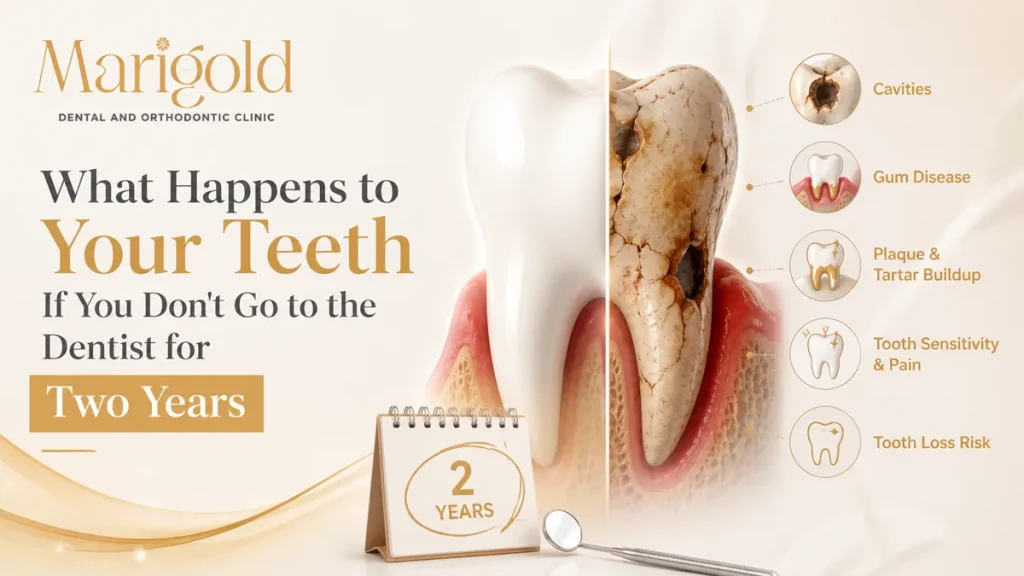
A small cavity that would have been simple to treat early can grow larger without announcing itself. This isn’t guaranteed. It’s one of the things that becomes more likely the longer a cavity goes unchecked, since untreated decay doesn’t tend to stay the same size.
An existing filling can also develop a small gap or leak at its edge over time, sometimes without any noticeable symptom. Whether this has actually happened varies considerably from person to person. Diet, home care habits, and how many restorations were already in place before the gap started all play a role.
None of this is inevitable. It’s simply what becomes possible once regular monitoring stops.
Gum Disease: The Part That Progresses Most Silently
Gum disease is where the absence of pain is most misleading. Gingivitis, the earliest stage, causes gums to become red, swollen, and prone to bleeding, often with little or no discomfort attached to it. Many people notice bleeding while brushing and dismiss it as normal rather than recognizing it as an early signal.
Left unaddressed, gingivitis can progress to periodontitis. This is where the distinction matters most. Gingivitis is reversible with proper care. Periodontitis involves bone loss around the teeth, and that loss doesn’t reverse the same way. The early signs most people miss are exactly the ones that separate an easily reversible stage from one that isn’t.
What Gum Health Has to Do With the Rest of the Body
Gum inflammation doesn’t stay contained to the mouth in every case. Research has identified associations between chronic gum inflammation and certain systemic conditions, including cardiovascular disease and diabetes. The broader relationship between oral health and the rest of the body is described by researchers as a link or a bidirectional relationship rather than a proven direct cause. The two conditions can influence each other in both directions.
This isn’t a reason for alarm on its own. It’s one more reason gum health is worth taking seriously as more than a cosmetic concern.
What a Dentist Actually Checks When You Come Back
A return appointment after a long gap starts with an assessment, not treatment. X-rays and a full exam establish where things actually stand, rather than working from assumptions about what might have happened during the time away.
The dentist checks for decay, evaluates gum health, and reviews any existing fillings or restorations for wear or damage. What a standard check-up actually involves is largely the same process whether someone was in six months ago or six years ago, just with more ground to cover after a longer gap.
The first visit is about gathering a complete picture, not fixing everything in one sitting.
Is It Too Late to Start Again?
No. Gingivitis is reversible even after a long gap, once plaque and tartar buildup are properly addressed. Cavities are treatable in most cases, though the appropriate treatment depends on how far the decay has progressed. The purpose of a return appointment is establishing where things stand now, not accounting for the time that’s passed.
Frequently Asked Questions
What happens if you don’t go to the dentist for years?
Outcomes vary. Some people return with minimal findings. Others find cavities that grew unnoticed or gum disease that progressed silently. The gap creates the possibility, not a guaranteed outcome.
Can gum disease happen without any pain?
Yes. Gingivitis, the earliest stage, often causes bleeding or swelling with little discomfort. This is exactly why it goes unnoticed until it’s progressed further.
Is it too late to go back to the dentist after years away?
No. Gingivitis is reversible, cavities are treatable, and the first visit back focuses on establishing a current picture rather than assigning blame for the gap.
Does skipping dental visits affect overall health?
Research has found associations between gum inflammation and certain systemic conditions, though the relationship is described as a link rather than a proven direct cause. It’s one more reason gum health matters beyond the mouth itself.
What does a dentist check after years away?
X-rays, a full exam of the teeth and gums, and a review of any existing fillings or restorations. A first visit back typically ends with a plan rather than immediate treatment.
Coming Back After a Long Gap
The appointment itself is straightforward: an assessment, a conversation about what was found, and a plan for whatever comes next. What that first visit involves after time away is worth knowing beforehand, particularly for anyone who’s been putting off the call because they’re unsure what to expect. From here, booking that assessment is a straightforward next step.