A missing tooth can make the next step seem fairly obvious. Replace it with an implant, restore the tooth, and move on.
Implant treatment doesn’t begin with placing the implant, though. Before that happens, the dentist needs a clear picture of the area where the tooth is missing and of the conditions that could affect the result. Gum health, bone volume, neighbouring teeth, and the way the upper and lower teeth meet all have a role in planning.
Sometimes the area is ready for treatment. Sometimes another problem needs attention first. Bone may need to be assessed more closely. Existing gum disease or an issue with a neighbouring tooth may need to be dealt with before implant treatment makes sense.
By the time an implant is actually placed, much of the important clinical reasoning has already taken place. What happens beforehand determines whether the site is ready, what needs attention first, and how the treatment should be planned.
Before the Implant, the Site Has to Be Assessed
A missing tooth leaves more than an empty space. The condition of the gum, the amount of supporting bone, and the health of the teeth around the area all affect how implant treatment can be planned.
The examination looks beyond the empty space. Gum inflammation or disease may need attention, while decay, infection, or other problems affecting neighbouring teeth can change the treatment plan. The way the teeth meet also matters, particularly when the missing tooth has altered the surrounding bite.
A missing tooth does not always mean the area is ready for an implant.
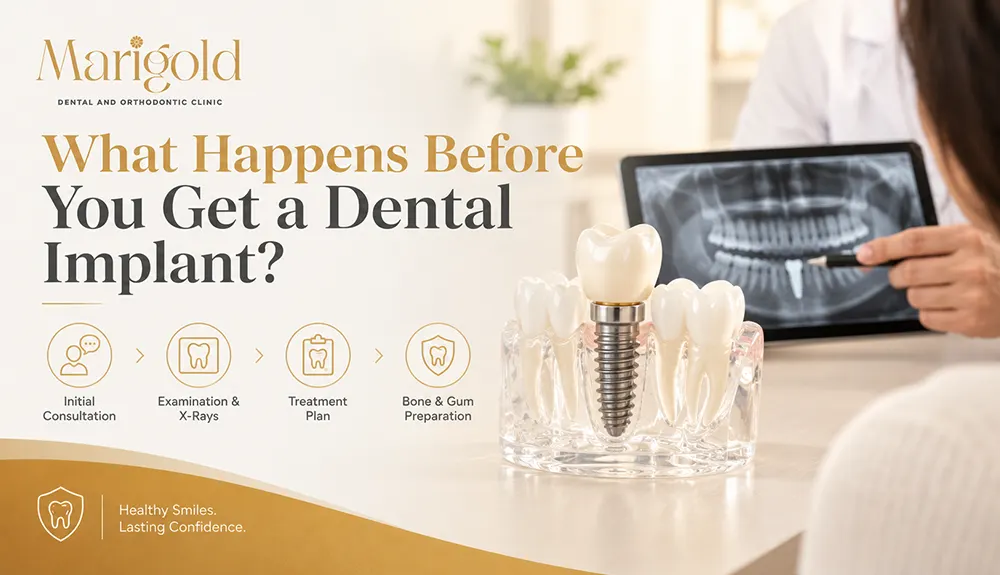
Imaging can add another layer of information. It can show the bone in the area and help the dentist understand the anatomy around the proposed implant site.
Only once those details are clear can the treatment be planned around the actual condition of the mouth. The missing tooth is the reason for considering an implant, but it isn’t the only thing that determines how treatment should proceed.
What Can Make an Implant Site Not Ready Yet?
Gum disease, an untreated infection, decay in neighbouring teeth, or changes in the bone can all affect the timing or planning of treatment. Sometimes the issue is straightforward to address. In other cases, the area needs more careful assessment before an implant can be considered.
Bone is particularly important because the implant needs suitable support in the jaw. Losing a tooth can also be followed by changes in the bone around the empty space, so the amount and condition of available bone become part of the assessment.
If the area has an untreated problem or doesn’t have the conditions needed for the planned implant, that needs to be identified before treatment begins. The dentist can then decide whether the site is ready or whether another step should come first.
The Plan Depends on What the Examination Finds
There isn’t one preparation process that applies to every implant case.
A person who has a healthy mouth and enough suitable bone may need a different plan from someone who has gum disease, an infection, or changes in the bone around the missing tooth. The number of teeth being replaced and their position can also affect how the treatment is planned.
Sometimes the next step is straightforward. In other cases, another dental problem needs to be addressed before the implant can be considered.
That is why the consultation comes before the procedure. The dentist isn’t simply deciding where to place an implant. They are working out what needs to happen first, what the site can support, and how the replacement should fit into the rest of the mouth.
The Implant Has to Work With the Tooth That Will Sit on Top of It
An implant isn’t the visible replacement for a missing tooth. It provides support for the crown that will eventually restore the space.
The final restoration affects the planning from the beginning. The dentist needs to consider how much room is available, where the neighbouring teeth sit, and how the replacement will meet the opposing teeth when you bite.
Placement also needs to account for the supporting bone and the position of nearby structures. A suitable implant position isn’t simply the centre of the empty space. It has to provide the right foundation for the restoration while fitting within the anatomy of the jaw.
For a patient, much of this planning happens before anything is placed. By the time implant surgery is discussed, the dentist should already understand what the replacement needs to achieve and what the available site can support.
What May Need to Happen Before the Implant Is Placed?
A healthy implant site may need little preparation. Gum disease, an active infection, or inadequate bone can change the sequence before an implant is placed.
Treatment for an existing dental problem may need to come first. In some cases, the available bone needs further assessment before the implant can be planned. The timing and order of treatment will depend on the condition of the area and the type of restoration being planned.
For the patient, this can mean that the implant isn’t the first procedure after the consultation. The work may begin with getting the mouth and the proposed implant site into a suitable condition for treatment.
That is part of implant planning, rather than an unexpected detour from it.
A Long-Standing Gap May Need More Planning
A tooth doesn’t leave the jaw unchanged after it is lost. Bone in the area can reduce over time, and neighbouring teeth may move into the space.
A recently lost tooth and a gap that has been present for years may present different conditions. The available bone, the position of nearby teeth, and the space for the planned crown all need to be considered together.
Implant placement therefore starts with understanding the condition of the site. The dentist needs to know what remains at the area of tooth loss and how the planned replacement can be accommodated before deciding how the implant should be placed.
Gum Health Can Change the Implant Plan
An implant is placed into tissue that needs to remain healthy around it. Existing gum disease therefore deserves attention before implant treatment moves forward.
Inflamed gums or disease affecting the supporting tissues can change the condition of the area around a missing tooth. Treating periodontal problems first may be necessary before the implant site is considered suitable for placement.
The same principle applies when infection or significant decay is present elsewhere in the mouth. Those problems don’t become irrelevant simply because the treatment being discussed is an implant.
A dental implant replaces one missing tooth, but the surrounding tissues remain part of the treatment. Their condition is one of the factors that determines whether the mouth is ready for the next stage.
The Implant Position Follows the Final Restoration
An implant is not positioned simply because a space is available.
The crown that will eventually replace the missing tooth has to sit in a position that works with the neighbouring teeth and the opposing bite. The available space, the position of the adjacent teeth, and the supporting bone all influence where the implant can be placed.
A small difference in position can matter to the final restoration. Implant placement therefore has to be planned with the finished tooth in mind, rather than treating the implant and crown as two unrelated stages.
The implant provides the foundation. The crown is what restores the missing tooth. Good planning has to account for both.
Before an Implant Is Placed
An implant is placed only after the dentist has worked out what is happening around the missing tooth.
The condition of the gums and bone matters, but so do the teeth beside the space, the available room for the crown, and the way the replacement will meet the opposing teeth. An infection, gum problem, or another untreated dental issue may need attention before placement can go ahead.
Planning the implant means planning the replacement tooth at the same time. The implant needs suitable support, and the final crown needs to work within the existing teeth and bite.
If you’re considering replacing a missing tooth, a consultation for dental implants in Abu Dhabi can establish what the area needs before treatment is planned.