A wisdom tooth can raise concerns long before it actually causes a problem.
It may be the first sign of pressure at the back of the mouth. Food may keep getting caught around it. An X-ray may show the tooth sitting at an angle that isn’t obvious from the mouth. A fully erupted tooth can also be healthy and cause no trouble at all.
“Wisdom tooth” isn’t, by itself, a reason for extraction.
The decision comes down to the tooth itself. Its position and condition both matter. The dentist also looks at whether it can be kept clean and whether nearby tissues are being affected.
The Tooth Itself Isn’t the Whole Story
One wisdom tooth may be easy to manage while another causes repeated problems. Even two wisdom teeth in the same mouth can present very differently.
One may erupt far enough to be cleaned normally. Another may remain partly covered by gum, which can make the area harder to keep clean. A tooth can also sit at an angle or have very little room to erupt. Both can affect what the dentist needs to assess.
The condition of the tooth matters too. So does the tooth next to it. Repeated inflammation, decay, or damage to the neighbouring tooth can change a tooth under observation into one that needs treatment.
The tooth’s name or age alone doesn’t determine the decision. The dentist is assessing how the wisdom tooth is functioning in the mouth and what may happen if it remains in place.
When Leaving a Wisdom Tooth Alone Makes Sense
Not every wisdom tooth needs removal simply because it is present.
A tooth may be left in place if it is healthy and can be cleaned properly. Removing a healthy, functional tooth may offer little benefit when it can be monitored.
A partly visible wisdom tooth may also remain in place when it is stable and free from recurring problems. The dentist considers whether the area can remain healthy and whether damage or disease is developing.
Monitoring means keeping the tooth under review rather than treating it simply because it is present. The approach can change if the tooth’s condition changes.
When the Equation Changes
Problems become more significant when a wisdom tooth repeatedly causes swelling, decay, or difficulty with cleaning.
Food can become trapped beneath the gum. The area then becomes harder to clean, and inflammation may recur. Decay can also develop in the wisdom tooth or the molar directly in front of it.
A wisdom tooth tilted toward the neighbouring molar may create a space where plaque and food collect. A tooth with very little room to erupt may remain partly covered by gum and become harder to manage.
A single episode of discomfort does not settle the question. Repeated inflammation, damage to the adjacent tooth, or signs of disease can change the treatment decision.
Extraction may then become an option. The reason is not simply its status as a wisdom tooth. The tooth may already be causing a problem, or its position may create a significant risk of future problems.
An X-Ray Can Change What the Tooth Looks Like
A wisdom tooth can appear harmless when only the erupted part is visible.
Important details may be hidden below the gum.
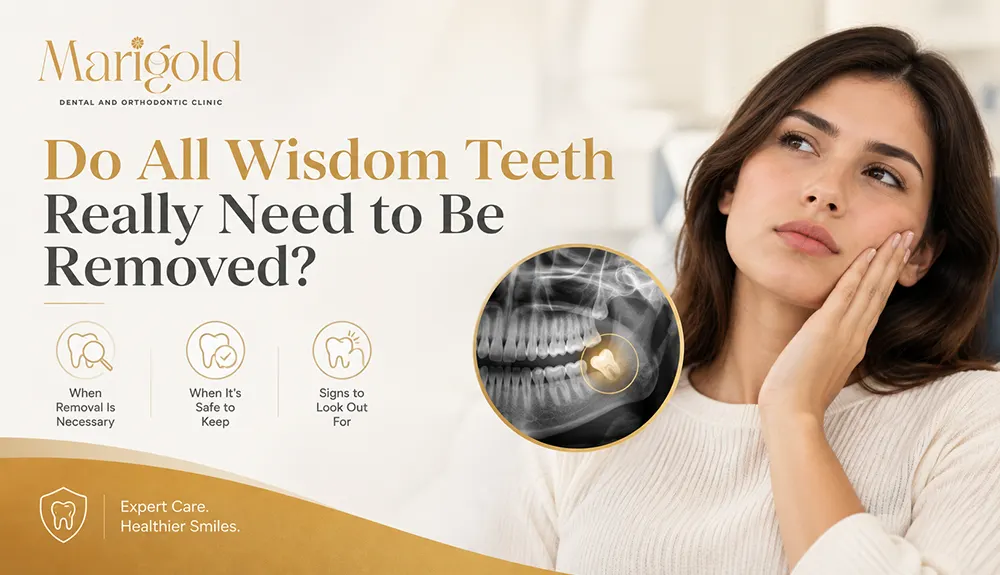
An X-ray can show whether the tooth is upright, tilted, partly trapped, or close to the neighbouring tooth. It can also show the roots and surrounding bone.
The visible tooth cannot show those details. An X-ray gives the dentist a clearer view of the tooth and surrounding structures.
A partly erupted or difficult-to-clean tooth may need closer assessment when its position affects the neighbouring molar. A tooth sitting upright and accessible may present a different situation.
What an Examination Actually Tells You
A wisdom tooth examination involves more than checking for pain.
The dentist checks how the tooth has erupted and whether the surrounding gum is healthy. They also assess cleaning access and the condition of the neighbouring tooth.
If the tooth is partly covered by gum or difficult to see, an X-ray may provide additional information.
The examination gives the dentist more information than a simple answer to “Is it causing pain?”
A tooth may feel comfortable but still be difficult to clean. Another may have caused repeated swelling. A third may be fully erupted, healthy, and easy to clean. All three are wisdom teeth, but their clinical circumstances differ.
The options may then become clearer: monitor the tooth, treat an existing problem, or discuss removal.
Pain Isn’t the Only Signal
Waiting for pain can make a wisdom tooth problem harder to assess.
Wisdom teeth can develop decay, gum inflammation, or problems affecting the neighbouring tooth without causing constant pain. Some people notice a problem only when the area becomes swollen or starts trapping food. Others may have no obvious symptoms.
Pain still matters. Swelling, tenderness, difficulty opening the mouth, and discomfort when chewing matter too. Symptoms are only one part of the assessment.
The tooth and surrounding tissues may show problems even without pain.
A wisdom tooth can feel fine today without being suitable to ignore. If its position makes cleaning difficult or signs of disease appear, the dentist may need to investigate further.
Keeping a Wisdom Tooth Doesn’t Mean Doing Nothing
Leaving a wisdom tooth in place does not mean forgetting about it.
A healthy, accessible tooth may not need immediate treatment if it is causing no problems around the gum or neighbouring tooth. The tooth can be monitored and reassessed if its condition changes.
Monitoring matters with wisdom teeth because their position can make changes difficult to notice yourself. Early gum inflammation or decay may not be obvious until the area becomes uncomfortable.
A healthy, manageable wisdom tooth may not remain so indefinitely. A tooth that has caused no trouble for years may continue to remain healthy.
A healthy tooth does not need unnecessary treatment. A tooth that becomes difficult to maintain should not be ignored.
When Removal Becomes the More Practical Option
Keeping a wisdom tooth becomes harder to justify when problems keep developing.
Repeated inflammation is one reason. Decay that cannot be managed reliably is another, particularly when the tooth is difficult to access. Damage or decay affecting the neighbouring molar can also change the decision.
The tooth’s position also matters. A tooth partly covered by gum or angled toward the neighbouring tooth may continue causing problems after symptoms settle.
The question is whether the particular tooth can remain healthy and manageable. The distinction matters before extraction is considered.
The Final Decision Isn’t “Wisdom Tooth or No Wisdom Tooth”
A wisdom tooth doesn’t need removal simply because it has erupted. It doesn’t need to stay simply because it isn’t painful.
The decision depends on the tooth itself. Its position, condition, and ability to stay clean all matter.
Monitoring may be appropriate. Removal may be worth considering when the tooth becomes difficult to maintain or starts causing damage.
An examination can show which option fits the condition of your tooth. If removal is recommended, you can learn more about wisdom tooth extraction in Abu Dhabi and what the procedure involves.
Being a wisdom tooth does not, by itself, determine the decision. Its condition and position do.