Teeth don’t suddenly turn yellow after one cup of coffee.
It’s more gradual than that. A drink here, another later, something in between. The exposure adds up, but not in a way that’s easy to notice day to day.
Dark beverages, sauces, even certain fruits leave behind residue each time. Not enough to see immediately, but enough to settle over time.
The change usually becomes visible later, not when it starts.
How Teeth Staining Actually Happens
Staining starts in a way that is easy to miss.
A cup of coffee, a sip of tea, a meal with strong color. Nothing changes right away. The surface looks the same after brushing, so it feels like nothing has stayed behind.
What actually remains is a thin residue. It settles along the enamel, especially near the gum line and between teeth where cleaning is less precise.
Acidic drinks and foods affect the surface differently. The enamel becomes slightly more receptive for a short period, which allows color to attach more easily if exposure happens again soon after.
The pattern matters more than the quantity. Frequent contact during the day leaves a stronger effect than a single intake, even if the amount is small.
Foods and Drinks That Cause Staining
Not all staining comes from obvious sources. Some of it builds through routine exposure rather than a single item.
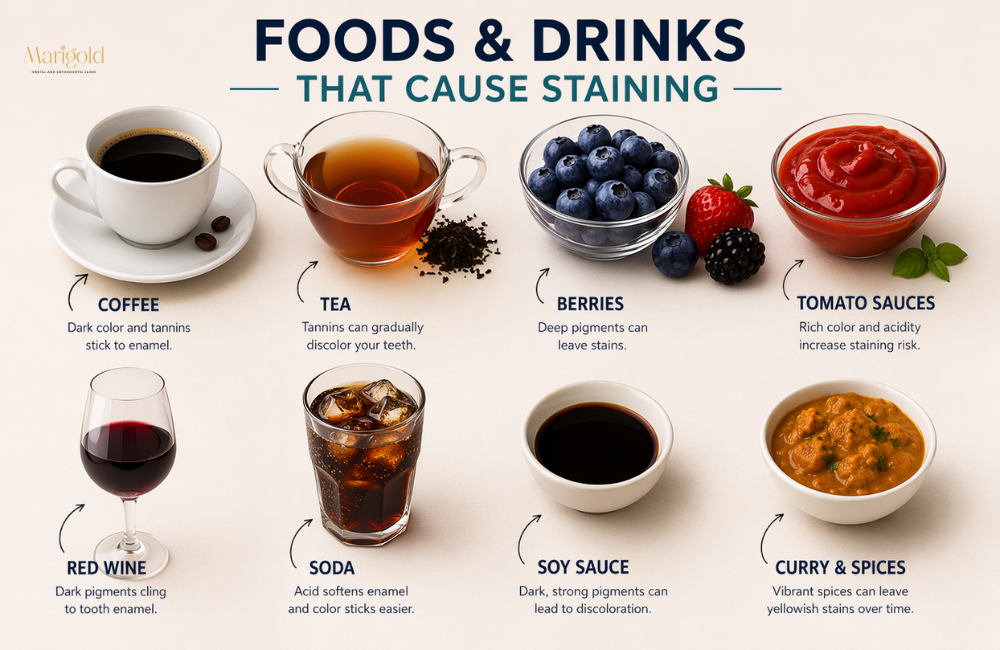
Dark beverages are one of the more consistent contributors. Coffee and tea come into contact with the teeth multiple times a day in many routines. The color is strong, but the frequency is what makes the difference.
Certain foods leave a similar effect. Berries, tomato-based sauces, and dishes with deep pigments tend to stay on the enamel for longer than lighter foods. The residue is not always removed completely with a quick rinse or a short brushing.
Acidic items add another layer to it. Citrus drinks and soft beverages do not leave strong color on their own, but they change the surface of the enamel for a short period. If something with color follows, it tends to settle more easily.
Combinations often go unnoticed. Coffee followed by a snack, or repeated sipping throughout the day, keeps the teeth exposed for longer than a single intake would.
Habits That Make Staining Worse
Staining is not only about what is consumed. It is often shaped by how it fits into the day.
Sipping over long periods is one of the more common patterns. A drink that stays in contact with the teeth for hours leaves a different effect than one taken in a short time.
Rinsing is often skipped. After coffee or strongly colored food, the residue remains on the surface until the next cleaning. In many cases, that delay is enough for it to settle.
Timing between intake also matters. Repeated exposure, especially without any break, keeps the enamel in contact with pigments throughout the day.
Some routines combine multiple factors without noticing. A drink, followed by something acidic, then another drink. The sequence creates conditions where staining becomes more likely.
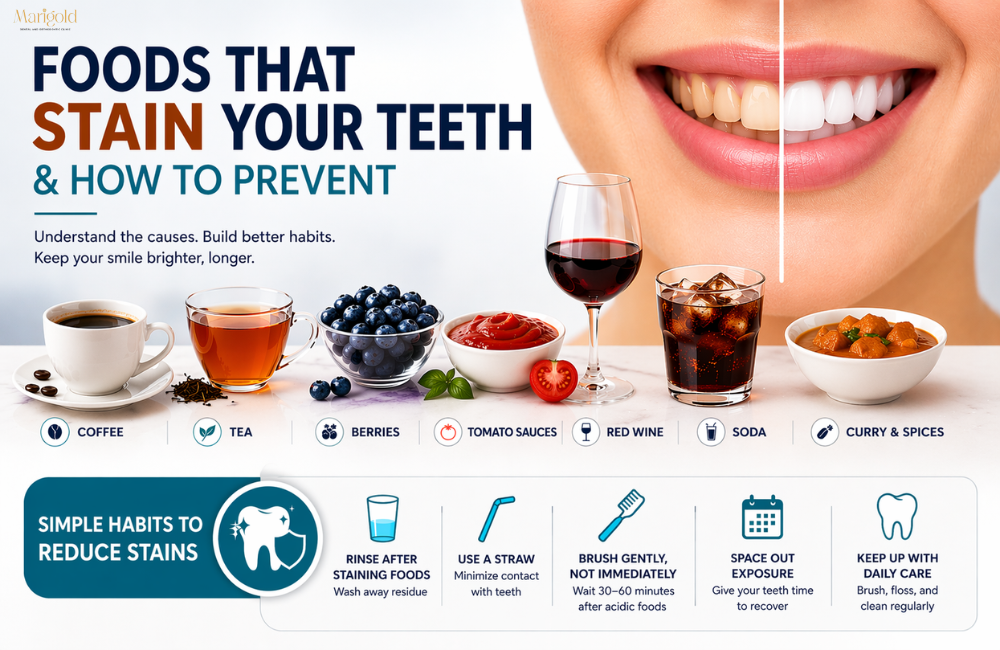
What Can Be Done to Reduce Staining
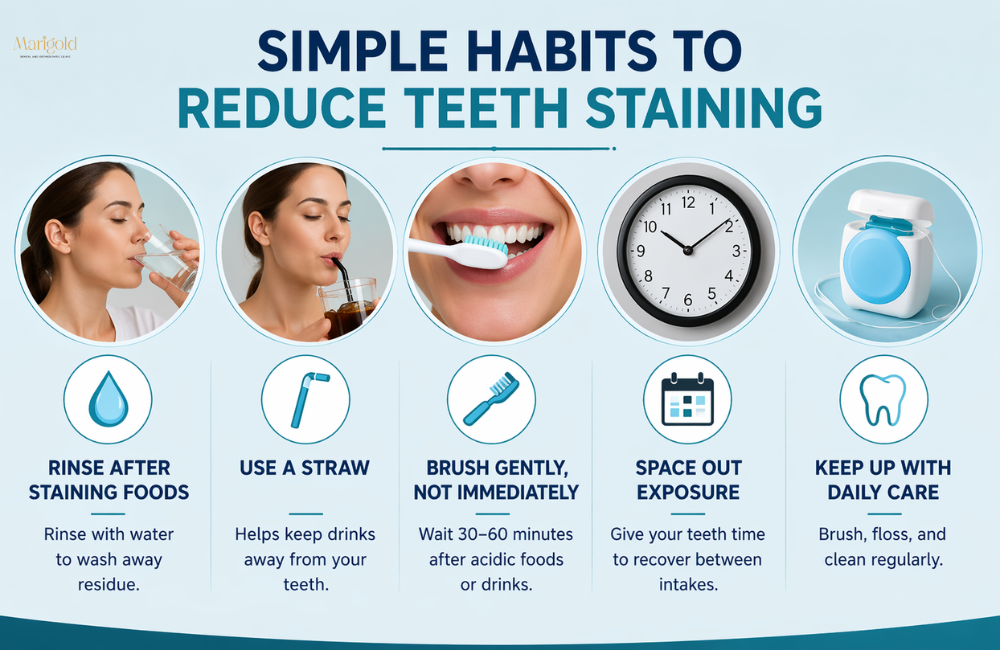
Staining is not only tied to what is consumed. It often comes down to how long the teeth stay in contact with it.
A drink finished in a few minutes passes quickly. The same drink, stretched across an hour, keeps returning to the surface again and again.
Rinsing is often overlooked. Without it, whatever remains stays in place until the next time the teeth are cleaned.
Spacing also changes the pattern. Repeated intake through the day leaves less time for the surface to clear between exposures.
Acidic foods affect timing. Brushing immediately after can work against the enamel rather than protect it.
The difference usually comes from how these moments are handled across the day, not from removing certain foods entirely.
What Staining Cannot Be Removed at Home
Not all staining stays on the surface.
Some discoloration settles deeper, beyond what brushing or rinsing can reach. It develops gradually, often from repeated exposure over time rather than a single source.
At that stage, the surface may feel clean, but the color does not change. Regular cleaning continues, but the appearance remains the same.
These types of stains do not respond to routine care alone. They require a different approach to be reduced or removed.
Professional teeth whitening can help address deeper staining that does not respond to daily care
After Whitening – What to Be Careful With
After whitening, the surface of the teeth becomes more responsive for a short period. During that time, color can attach more easily than usual.
Certain foods and drinks tend to affect the result if they are introduced too soon. Coffee, tea, and strongly pigmented items can begin to leave marks again before the surface settles back to normal.
The timing of intake becomes more noticeable here. Reintroducing these items gradually helps maintain the result for longer.
For a clearer idea of what fits into this period, it helps to look at what you can eat after teeth whitening
Common Misconceptions About Teeth Staining
Staining is often misunderstood, especially in how it develops and how it can be managed.
- Brushing harder will remove stains
Pressure does not affect deeper discoloration. It can wear the enamel without improving appearance.
- All stains behave the same way
Surface stains and deeper discoloration respond differently. Treating them the same rarely works.
- Quick fixes can reverse staining
Changes in color develop over time. Reversing them is rarely immediate.
- If teeth feel clean, staining is gone
Surface smoothness does not reflect color. Discoloration can remain even when the teeth feel clean.
For a clearer breakdown of these ideas, it helps to go through common teeth whitening myths and facts.
Closing
Staining develops gradually, often without drawing attention at the start.
Daily habits shape how it builds over time. Small patterns, repeated throughout the day, tend to leave a stronger impact than occasional exposure.
Keeping those patterns in check, along with periodic care when needed, helps maintain the appearance over the long term.