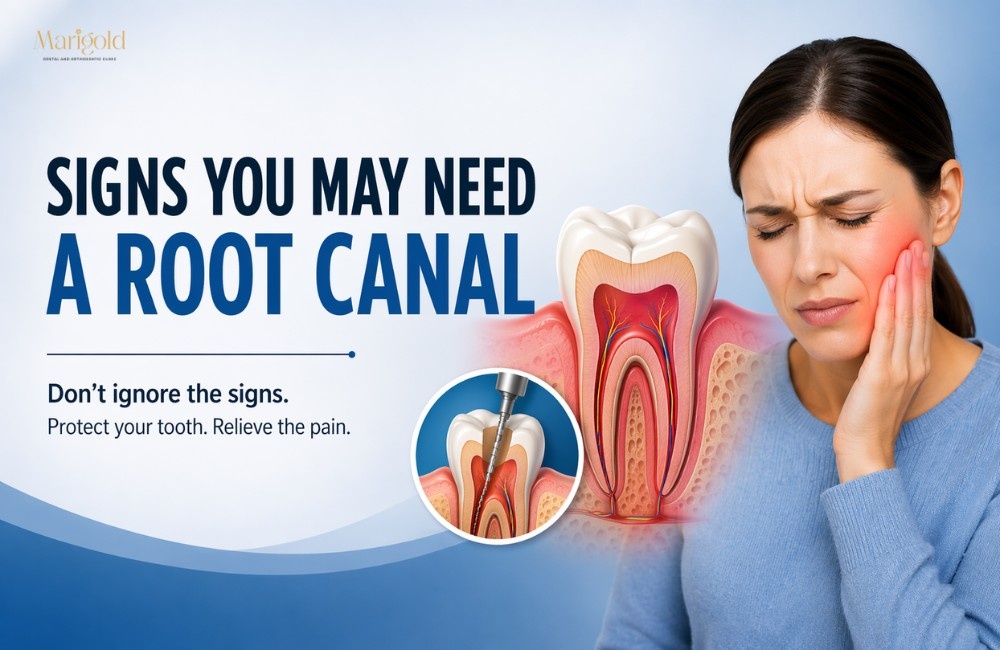
A tooth that starts hurting does not always behave the same way.
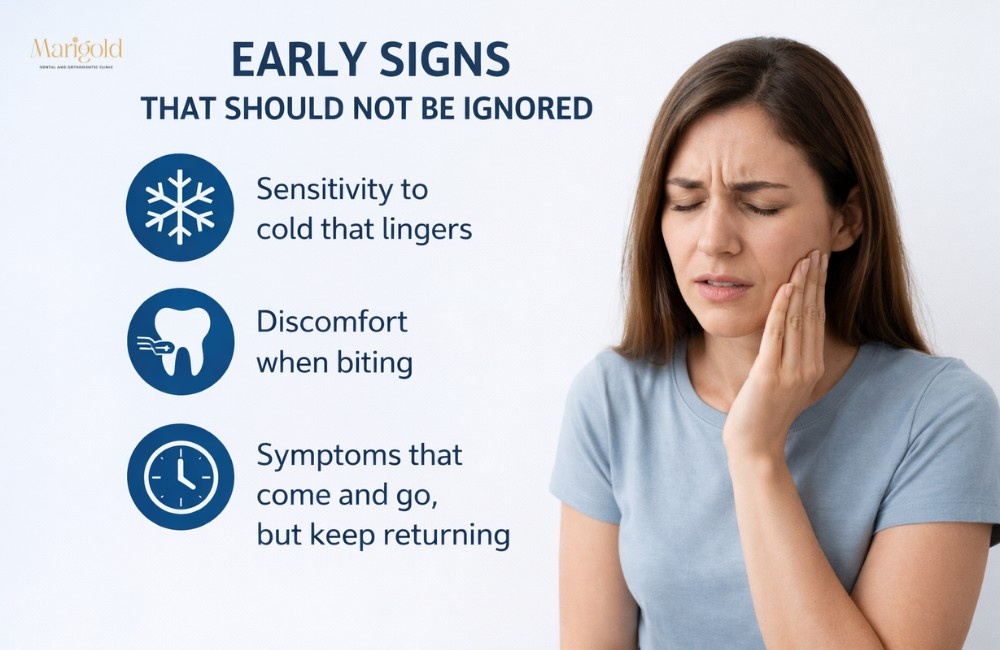
It might react when you drink something cold. Later, the same tooth feels fine. Then it comes back when you bite down, or when you leave it alone.
That shift is what makes it confusing. The problem is not always the intensity. It is the change in how the tooth responds.
Some patterns point to irritation near the surface. Others suggest something deeper inside the tooth.
What a Root Canal Actually Treats
Inside the tooth, beneath the outer layers, there is a soft tissue that contains nerves and blood supply.
When that area becomes irritated or infected, the tooth starts to respond differently. The reaction is not always constant. It may appear only under certain conditions at first.
The source of the problem is not the surface. It develops deeper, where routine cleaning does not reach.
As the condition progresses, the response becomes more consistent. What starts as occasional sensitivity can turn into discomfort that no longer settles on its own.
A root canal is used to address that internal infection while preserving the structure of the tooth.
When Symptoms Become More Serious
At some point, the tooth stops settling back the way it used to.
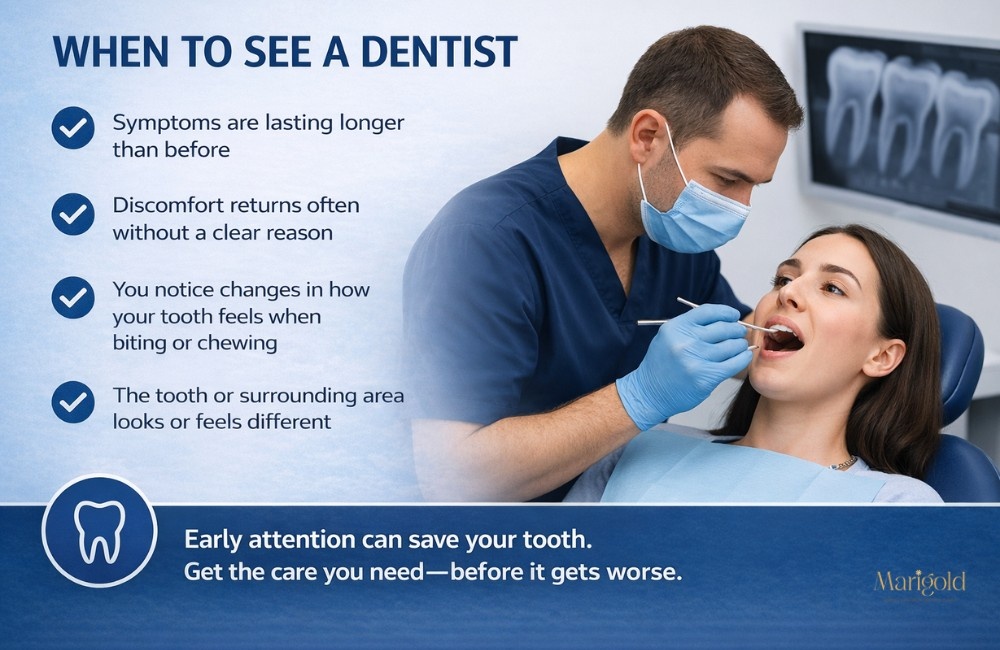
What felt occasional starts showing up without a clear reason. You’re not eating or drinking anything specific, but the sensation is there anyway.
Biting becomes something you notice more than before. Not every time, but often enough that you begin to avoid using that side. Sometimes the change shows visually. The tooth looks slightly different, or the area around it doesn’t feel the same when you press against it.
It’s not one symptom that stands out. It’s the shift from something that came and went… to something that stays.
Types of Pain That Point to a Deeper Problem
Pain does not stay the same when the source is deeper.
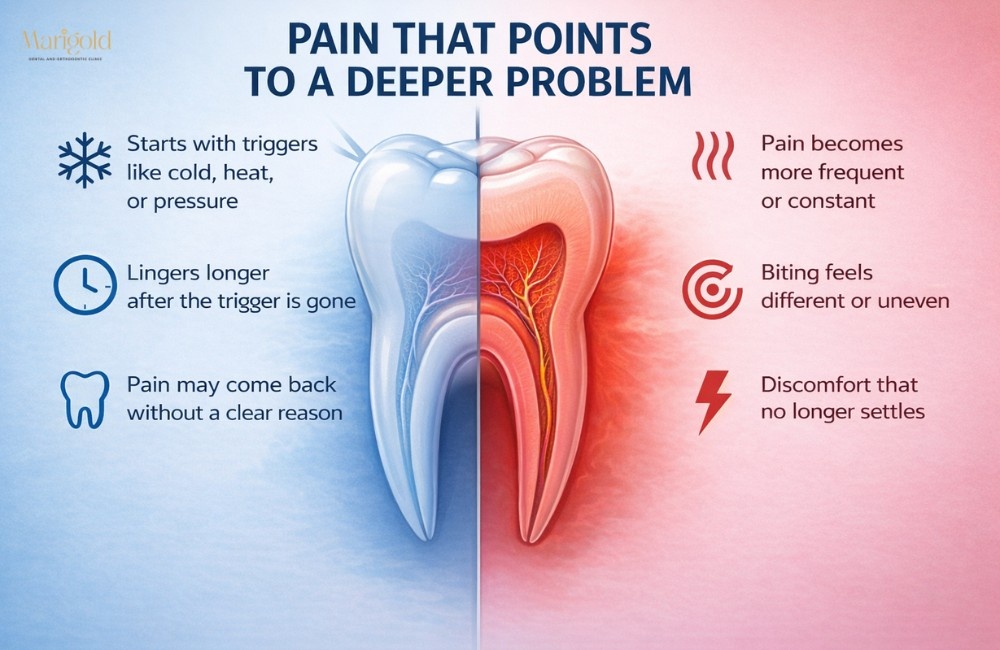
At first, it may only appear with something specific. Cold, heat, or pressure. Then it starts to show up without a clear trigger, or stays longer than expected after the cause is gone.
There’s also a difference in how it feels. A brief reaction is one thing. A sensation that lingers, or returns on its own, feels different. It’s harder to ignore.
Biting can change as well. One spot feels sharper than the rest, or the pressure doesn’t distribute evenly. You begin to notice it without trying to.
In some cases, the discomfort becomes more constant. Not always intense, but present enough that it doesn’t fully settle.
What Happens If the Infection Is Left Untreated
When the source of the problem is not addressed, the condition doesn’t stay the same.
What begins inside the tooth can extend beyond it over time. The discomfort that was once occasional becomes more consistent, and the tooth no longer settles between episodes.
Pressure and sensitivity may increase, but not always in a sudden way. In many cases, the change is gradual, becoming more noticeable as normal use of the tooth becomes difficult.
The surrounding area can also be affected. The issue is no longer limited to a single point, and the response begins to involve nearby tissue.
It’s not always immediate, but the direction tends to move forward rather than resolve on its own.
When Treatment Becomes Necessary
When the condition reaches a point where the tooth no longer settles, routine care is no longer enough to manage it.
At that stage, the source lies deeper within the tooth. The discomfort may vary, but the underlying issue remains present and does not resolve on its own.
Treatment is considered when the infection affects the inner structure and begins to interfere with normal function. The goal is not only to relieve discomfort, but to prevent further progression.
In such cases, root canal treatment may be required to address the infection and preserve the tooth
Closing
Changes in a tooth rarely follow a clear pattern at the beginning.
What matters is how those changes develop over time. When the response becomes more consistent, or begins to interfere with normal use, it usually points to something that needs closer attention.