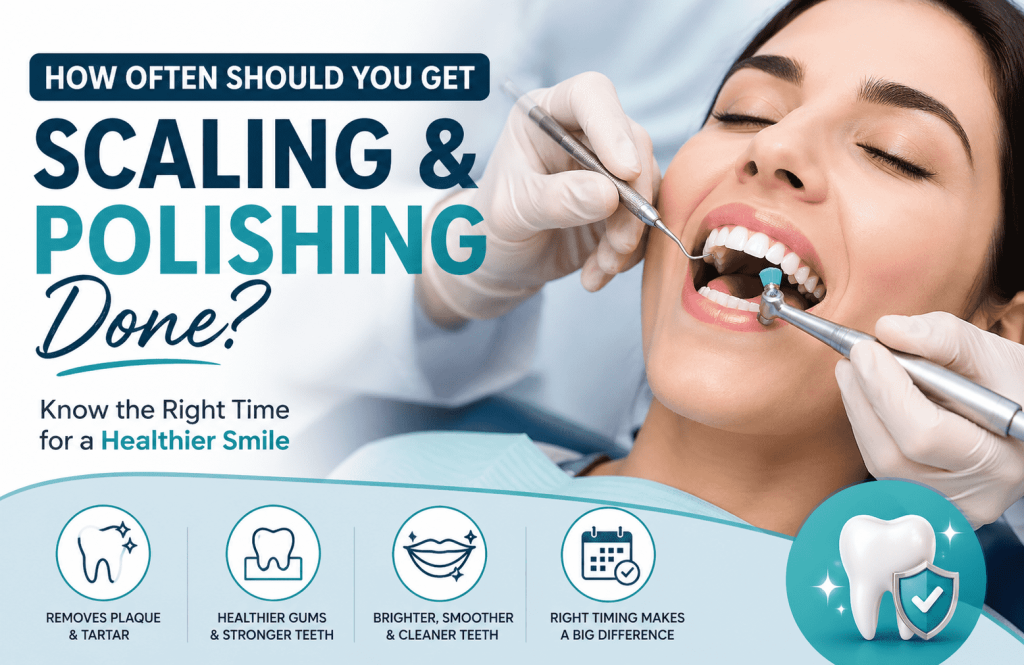
The question usually comes down to a number. Six months gets mentioned often, sometimes a year, sometimes longer. It sounds like something that should follow a fixed gap. (If you’re new to these terms, it helps to first understand the difference between scaling and polishing.)
Plaque doesn’t build at the same rate for everyone. After a few months, one person may have very little to remove, while another already has visible deposits along the gum line. The routine may look the same on the surface, but the result inside the mouth doesn’t match.
What matters is how quickly deposits form and how the gums respond to them. That part doesn’t stay consistent from one person to another.
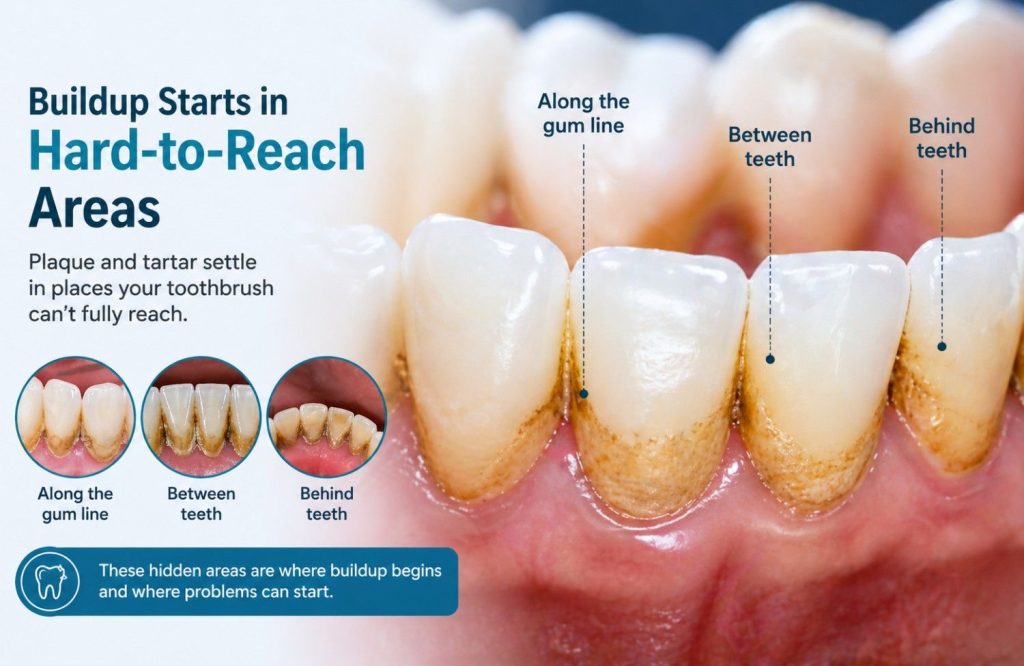
Buildup starts in the areas brushing doesn’t fully reach
Plaque doesn’t spread evenly across the teeth. It settles more in certain areas, especially near the gum line and between teeth where brushing doesn’t always reach fully.
Those spots don’t always feel different at first. The surface may still seem smooth, but a thin layer starts to stay in place if it isn’t removed properly.
Over time, that layer hardens. Once it does, regular brushing no longer clears it, and it stays in the same areas until it’s removed professionally.
A rough feeling near the gums that doesn’t go away after brushing
Some areas stop feeling completely clean, even right after brushing. The front teeth may feel smooth, but near the gums or behind the lower teeth, there’s a slight roughness that keeps coming back.
The surface feels smooth in most areas, but near the gums or behind certain teeth, the texture is different. Brushing doesn’t change that spot the way it does the rest. The same area feels rough again later, even after cleaning. It settles briefly, then returns in the same place.
With time, the change becomes easier to notice. Not because it suddenly gets worse, but because it doesn’t clear the way other areas do.
Teeth that stay smooth longer without much buildup
Some mouths don’t develop that roughness as quickly. The surface stays smooth for longer, even in areas close to the gums or between teeth.
Brushing clears most of what builds up, and it doesn’t return in the same spots right away. The texture remains consistent, without that one area standing out from the rest.
Even after a longer gap, there may be very little to remove. The difference isn’t in the routine, but in how the mouth responds over time.
Buildup that hardens and stays in place over time
When deposits are left for longer, they don’t stay soft. The surface near the gums begins to feel more solid, and brushing no longer changes it.
That layer starts to sit along the same line, especially on the inner side of the lower teeth or around the back molars. It doesn’t shift or reduce with regular cleaning.
As it builds, the gums around those areas may not feel the same. Not sharp pain, just a change in how they respond during brushing or eating.
The right time is when buildup starts to stay instead of clearing
As long as the surface returns to normal after brushing, there isn’t much to remove. The teeth feel consistent, and no single area stands out.
Once certain spots stop clearing the same way, the timing changes. The surface stays rough in the same place, or a layer remains near the gums without shifting.
That’s usually the point where waiting longer doesn’t improve anything. The buildup stays in place, and regular cleaning stops making a difference.
What brushing leaves behind over time
Some areas don’t respond to brushing once the deposits have hardened. The surface may feel unchanged no matter how thoroughly it’s cleaned at home.
That layer stays close to the gums or between teeth, where it continues to build without being removed.
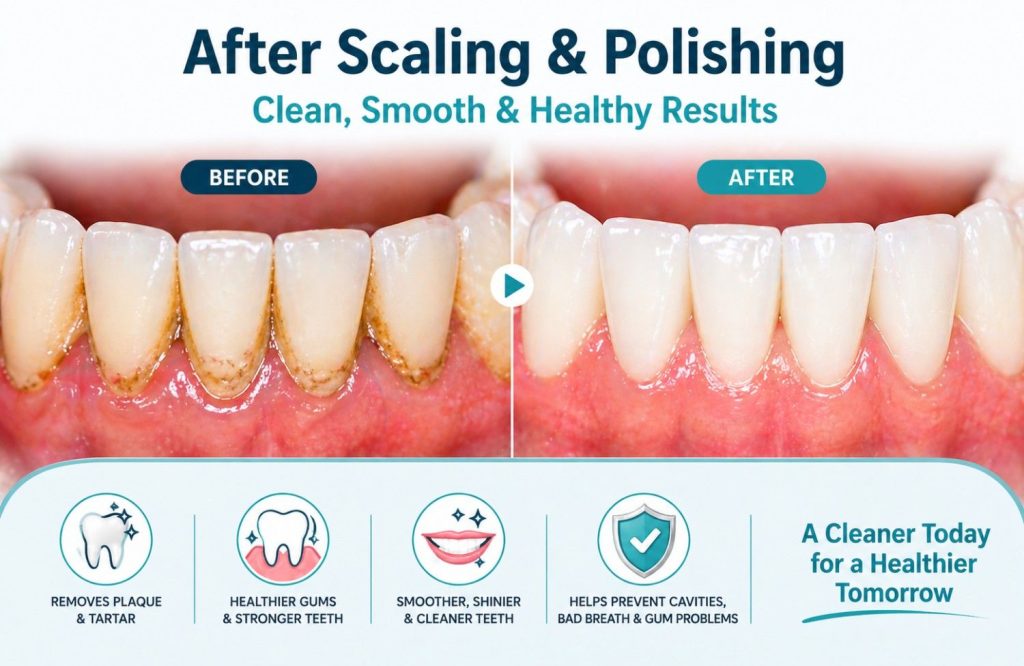
In those cases, scaling and polishing helps remove buildup that brushing cannot reach
Closing Thought
Some teeth stay smooth for longer, while others start to feel different in specific areas. The change isn’t always obvious at first, but it shows up in how the surface responds over time.
The timing usually becomes clear from that. Not from a fixed gap, but from what starts to stay instead of clearing