Orthodontic treatment does a lot of quiet, steady work behind the scenes — nudging teeth into place day after day. But every so often, something shifts, snaps, or pokes where it shouldn’t, and suddenly you’re not sure if you need to rush to the clinic or just ride it out until your next appointment.
The good news: most orthodontic issues are minor and manageable at home. A smaller number need same-day attention. Knowing the difference can save you a lot of unnecessary worry — and protect your treatment progress.
Is It Actually an Emergency?
Not every braces problem is urgent. Before you panic, it helps to sort the issue into one of two buckets.
Can usually wait for a scheduled visit:
- A loose bracket that’s still attached to the wire
- Mild soreness after an adjustment
- A wire that’s slightly bent but not poking anywhere
- Food stuck between brackets
Needs prompt attention (call your orthodontist):
- A wire poking or digging into your cheek, gum, or tongue
- A bracket that has come off completely
- Severe pain that doesn’t ease with usual remedies
- Swelling, infection, or an injury to the mouth or braces
- A broken retainer or appliance causing a change in bite
If you’re ever unsure which bucket you’re in, it’s always safer to call the clinic and describe what’s happening rather than guess.
A Wire Is Poking My Cheek — What Do I Do?
This is one of the most common braces complaints, and it’s usually easy to manage temporarily at home.
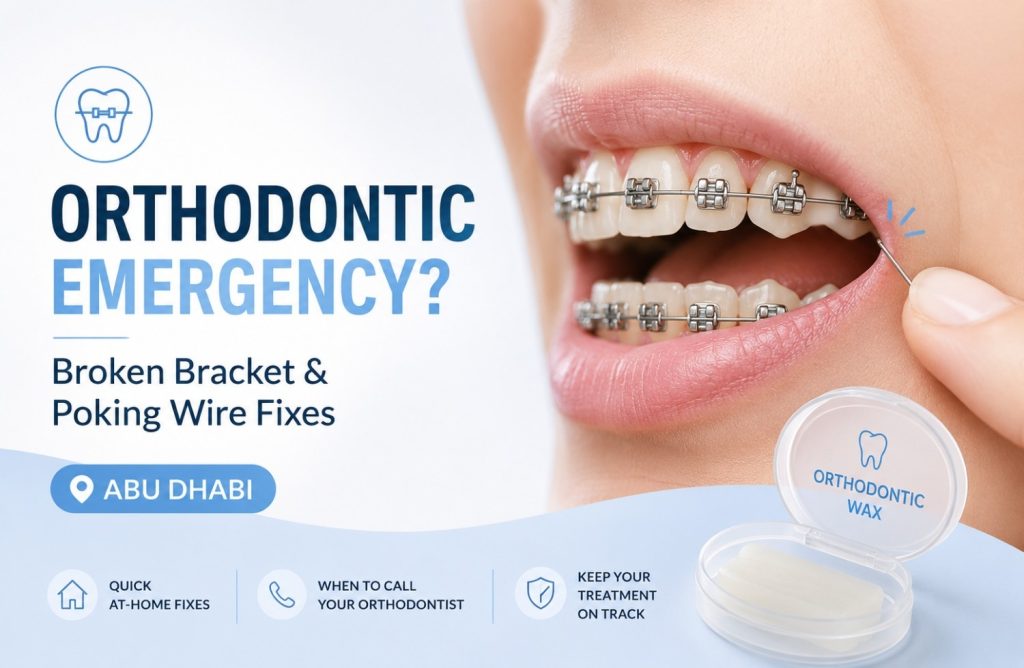
- Try to reposition the wire. Using the eraser end of a pencil, a cotton swab, or clean tweezers, gently push the wire back so it lies flatter against the tooth, away from soft tissue.
- Cover it with orthodontic wax. Dry the area slightly, pinch off a small ball of wax, and press it firmly over the sharp end of the wire. This creates a smooth barrier so it stops irritating your cheek or gum.
- No wax on hand? A small piece of clean cotton or even sugar-free gum can work as a short-term buffer until you get proper wax.
- Rinse with warm salt water if the area feels irritated or sore.
What not to do: avoid cutting the wire yourself with scissors or nail clippers. It’s easy to clip off a piece that gets swallowed or inhaled, and it doesn’t fix the underlying issue.
A Bracket Has Come Loose or Broken Off
If a bracket is still attached to the wire but has slid out of place, it’s usually not urgent — you can cover any sharp edge with wax and book a repair appointment. If it’s fully detached and loose in your mouth:
- Remove it carefully to avoid swallowing it, and keep it — your orthodontist may be able to reuse it.
- Cover any exposed wire end with wax.
- Avoid chewing on that side of the mouth until it’s fixed.
A single loose bracket rarely derails your treatment plan, but leaving it unaddressed for too long can allow the tooth to drift, which may slow your progress. This is one reason your orthodontist chooses the type of braces best suited to your bite in the first place — some brackets are simply more prone to this than others.
General Soreness After an Adjustment
Some tenderness for two to three days after a tightening is completely normal — it means the braces are doing their job. This isn’t an emergency. To manage it:
- Stick to soft foods for a day or two
- Rinse with warm salt water
- Use an over-the-counter pain reliever if needed, as advised by your dentist
- Apply orthodontic wax over any spots rubbing against your lips or cheeks
When to Call the Clinic Immediately
Some situations shouldn’t wait, even a day:
- A mouth or facial injury involving the braces (e.g., a fall or sports accident)
- Significant swelling, especially with fever
- A bracket or wire that has caused a cut requiring more than basic first aid
- Sudden, severe pain unrelated to a recent adjustment
If any of these happen, contact your orthodontist right away rather than waiting for a routine appointment.
Your At-Home Orthodontic Emergency Kit
Keeping a small kit on hand makes these situations far less stressful:
- Orthodontic relief wax
- Small mirror
- Blunt-ended tweezers
- Cotton swabs or cotton balls
- Saltwater rinse (or salt to mix with warm water)
- Over-the-counter pain relief (as recommended by your dentist)
- Your orthodontist’s contact number saved somewhere easy to find
How to Prevent Braces Emergencies in the First Place
A little caution goes a long way in avoiding these situations altogether:
- Avoid hard, sticky, or chewy foods — ice, hard candy, caramel, and crusty bread are common culprits behind broken brackets
- Wear a mouthguard during sports, especially contact sports
- Don’t chew on pens, nails, or other objects
- Keep up with regular adjustment visits so issues are caught early
- Handle your braces gently when brushing and flossing around them
The Bottom Line
Most orthodontic hiccups — a poking wire, a loose bracket, some post-adjustment soreness — are common, manageable, and not a sign that anything has gone wrong with your treatment. A little wax, a warm salt rinse, and a phone call to your clinic will usually sort things out. Save the genuine urgency for injuries, real pain, or swelling.
If something about your braces feels off and you’re not sure what to do, don’t wait it out in discomfort — reach out to our orthodontic team. We’re always happy to talk you through it or get you in for a quick fix.