What Composite Bonding Actually Is
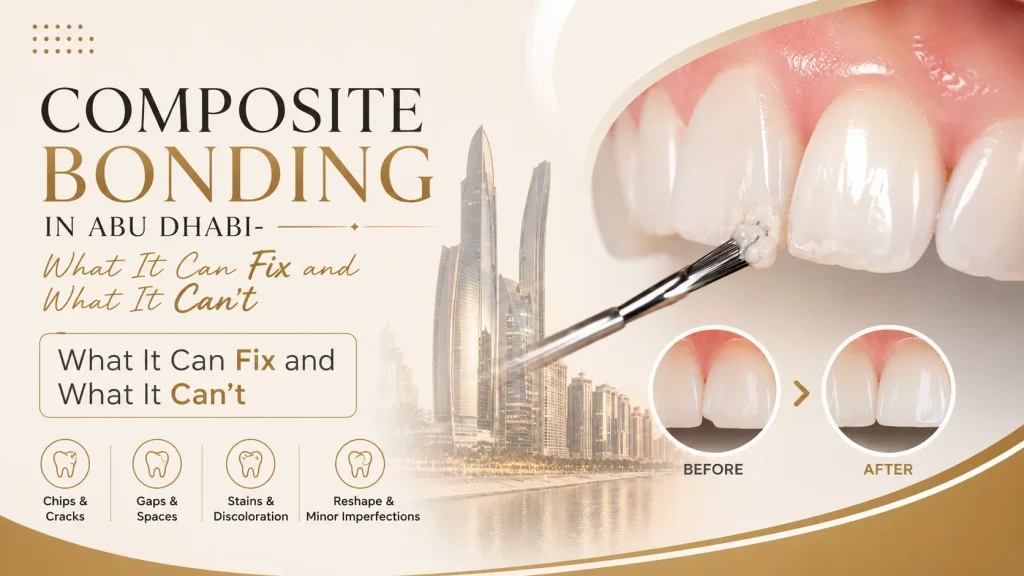
Composite bonding uses a tooth-coloured resin applied directly onto the tooth surface. A dentist sculpts the resin by hand while it’s still soft, shaping it to match the tooth beside it. A curing light hardens the material in seconds, layer by layer.
Most cases need little or no enamel removal. The resin bonds to the existing tooth structure rather than replacing it. This makes bonding one of the least invasive cosmetic options available.
What Composite Bonding Can Actually Fix
Bonding works well on small, specific problems rather than whole-mouth changes. A chipped edge on a front tooth is one of the most common cases treated this way. Small gaps between the front teeth can often close without orthodontics.
Bonding also handles:
- Minor unevenness along the biting edge of a tooth
- Small areas of surface wear from years of normal use
- Slight asymmetry between two front teeth
- A single tooth that sits marginally shorter or longer than its neighbour
Each of these cases shares one trait. The underlying tooth structure is healthy. Bonding adds to what’s already there.
What Composite Bonding Can’t Fix
Bonding cannot lighten a tooth discoloured from the inside. Internal staining, often from an old root canal or trauma, sits beneath the enamel where surface resin can’t reach it. Whitening or a veneer addresses that discolouration instead.
Bonding also can’t correct real misalignment. A tooth that’s rotated or significantly out of position needs orthodontic movement, not a surface addition. Disguising major crookedness with bonding usually looks unnatural. It rarely lasts either.
Composite resin is softer than porcelain. It holds up to normal biting and chewing but wears faster under heavy bite force or grinding. Someone who grinds their teeth at night sees bonding wear down sooner than someone who doesn’t.
Bonding isn’t built to cover an entire discoloured smile either. Applying resin across many teeth to mask overall yellowing tends to look patchy compared to a coordinated veneer or whitening approach.
How Reversible Composite Bonding Actually Is
Most bonding cases involve minimal enamel removal, and many involve none at all. The tooth underneath stays largely intact. This sets bonding apart from porcelain veneers, which require removing a thin layer of enamel that can’t grow back.
Bonding material can be reshaped, repaired, or replaced without damaging the tooth beneath it. A chip in the bonding itself gets fixed by adding more resin, not by starting over. This makes bonding a lower-commitment option for someone still deciding how far they want to go with cosmetic treatment.
Composite Bonding Cost in Abu Dhabi and How Long It Lasts
Composite bonding costs less per tooth than porcelain veneers. A single tooth typically costs a fraction of what a porcelain veneer runs. This makes bonding the more accessible entry point into cosmetic dentistry.
Bonding typically lasts five to seven years before it needs refinishing or replacement. Porcelain veneers last ten to twenty years with normal care. The cost gap narrows once replacement is factored in over a decade. Bonding still tends to work out cheaper for someone treating one or two teeth.
The right choice depends on scope. A single chipped tooth rarely justifies the higher upfront cost of porcelain. A full cosmetic overhaul often favours the material with the longer lifespan.
What Happens During a Composite Bonding Appointment
Shade selection happens first, matching the resin to the surrounding teeth. The tooth surface gets lightly conditioned so the resin bonds securely. Resin is then applied in thin layers, each one shaped and cured before the next goes on.
A dentist adjusts the shape while the material is still workable, checking it against the bite and against the neighbouring teeth. The final layer gets polished to match the natural sheen of surrounding enamel.
Most bonding cases finish in a single appointment, often within an hour per tooth. No lab fabrication or temporary restoration stage is needed, unlike porcelain veneers.
When Bonding Isn’t Enough: Moving to Veneers or a Wider Treatment Plan
Bonding suits isolated problems well but has real limits once a case grows larger. Someone needing correction across six or more teeth, or facing discolouration too deep for resin to mask, is usually better served by veneers. Our dedicated veneers page covers that material comparison in more depth.
A patient considering a broader cosmetic change, beyond one or two teeth, may be looking at something closer to a Hollywood Smile plan rather than isolated bonding work. Our Hollywood Smile page explains how that treatment differs in scope.
A consultation is the fastest way to know which category a specific case falls into.
Frequently Asked Questions
What can composite bonding fix? Bonding fixes small chips, minor gaps, slight edge unevenness, and small areas of surface wear on otherwise healthy teeth.
What can’t composite bonding fix? Bonding can’t lighten teeth discoloured from the inside, correct real misalignment, or reliably cover an entire discoloured smile.
Is composite bonding reversible? Most cases involve little to no enamel removal, so the underlying tooth stays largely intact. This makes bonding far more reversible than porcelain veneers.
How long does composite bonding last? Bonding typically lasts five to seven years before it needs refinishing or replacement, compared to ten to twenty years for porcelain veneers.
How much does composite bonding cost in Abu Dhabi? Bonding costs less per tooth than porcelain veneers, making it a more accessible option for treating one or two teeth rather than a full smile.
Finding Out If Bonding Is the Right Fit
A chipped tooth or a small gap doesn’t always call for a full cosmetic plan. Composite bonding handles a narrower set of problems well, and knowing where that boundary sits is what makes the treatment worth choosing in the first place. Marigold Dental & Orthodontic Clinic’s team can confirm within a single consultation whether a case fits that boundary, or needs something more.