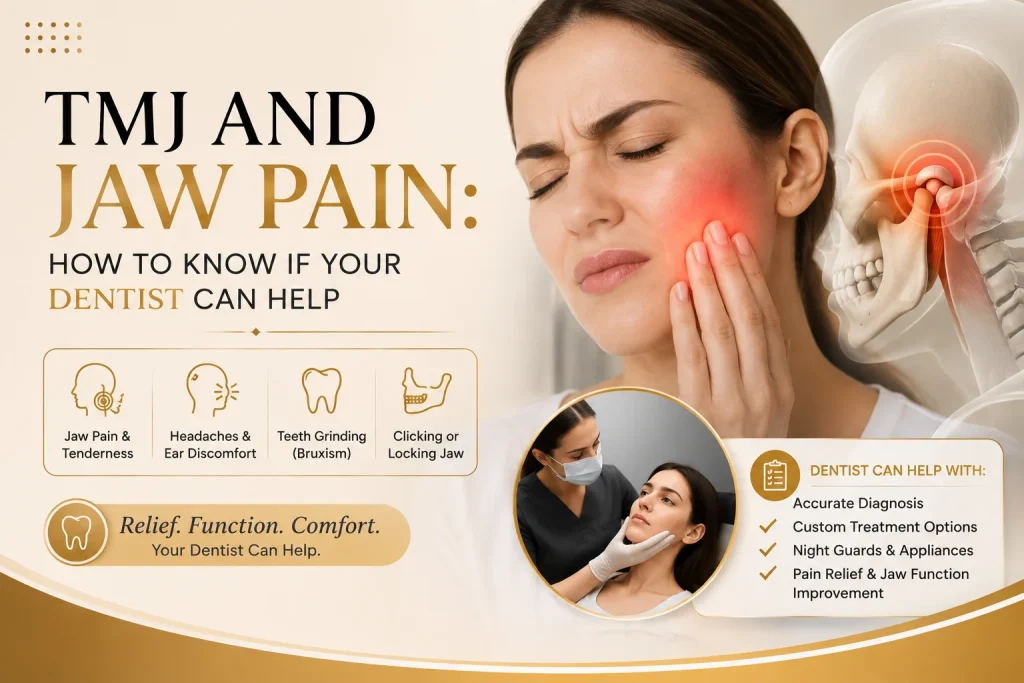
What TMJ Disorder Actually Is
TMJ disorder is an umbrella term, not one single condition. It covers problems affecting the jaw joint itself, the muscles that move it, or the way the upper and lower teeth meet. More than thirty distinct issues fall under this category, ranging from muscle tension to structural joint problems.
Clicking or popping in the jaw without pain is common. On its own, it doesn’t need treatment. Pain, locking, or a jaw that feels restricted is where the condition starts to warrant a closer look.
The Symptoms That Point to TMJ Rather Than Something Else
Pain near the ear or along the jaw that gets worse with chewing or extended talking is one of the clearest signals. Clicking or grating that comes with pain, rather than just sound, points the same direction. A jaw that locks, even briefly, when opening wide or closing fully is a stronger indicator than clicking alone.
Muscle fatigue after normal use is easy to dismiss. A jaw that feels tired or tight after a regular meal often means the chewing muscles are under more strain than they should be.
Morning Jaw Pain and Headaches: The Grinding Connection
Waking up with jaw soreness or a dull headache is a pattern many people never connect to what’s happening overnight. Nighttime clenching or grinding repeatedly tenses the jaw muscles for hours without the person being aware of it. That sustained tension produces the morning ache, not anything happening during the day.
The muscles involved are the same ones used for chewing. Repeated overnight strain shows up the same way overused muscles do anywhere else in the body. A fitted device worn during sleep interrupts that clenching pattern at its source, which tends to work better than treating the headache after it’s already started.
TMJ Pain vs Tooth Pain: Telling Them Apart
TMJ pain tends to feel muscular and spread across the jaw or face rather than sitting in one spot. It often changes with jaw movement, easing at rest and increasing with chewing or wide opening. Tooth pain behaves differently. It’s usually sharp, localized to one tooth, and tied closely to temperature or biting pressure rather than jaw motion.
Sensitivity adds another layer of confusion here. Sensitivity from grinding tends to affect several teeth at once, often across a wide area of the mouth, and correlates with jaw and muscle symptoms rather than one damaged tooth. Sensitivity from decay is usually confined to a single tooth and doesn’t improve when the jaw is at rest, since decay-related pain has nothing to do with muscle activity.
Can a Dentist Actually Treat TMJ, or Do You Need a Specialist?
A dentist can assess bite alignment, jaw joint mechanics, tooth wear patterns, and muscle tenderness directly. These four factors account for a large share of TMJ cases, particularly ones connected to grinding, clenching, or an uneven bite. Conservative dental treatment resolves many of these without needing another specialist involved at all.
Referral becomes necessary when the cause sits outside dental scope. Arthritis affecting the joint needs a rheumatologist’s input. A nerve-related pain condition or a sleep-breathing disorder contributing to nighttime clenching needs a different specialist too. A dentist who identifies one of these during assessment refers out rather than attempting to treat something beyond what a dental evaluation can address.
What a TMJ Evaluation Actually Involves
The first part of an evaluation is a detailed history. Questions cover stress levels, sleep quality, grinding or clenching habits, and any recent dental work that might have changed the bite. This history often reveals more than the physical exam alone.
A hands-on exam follows. The dentist palpates the jaw joint and surrounding muscles while the patient opens and closes, checking for tenderness, clicking, or restricted movement. Tooth wear patterns get checked too, since flattened or chipped edges often reveal grinding the patient wasn’t aware of.
Imaging isn’t a default step. X-rays or scans get added only when exam findings suggest a structural issue that needs a closer look.
Conservative Treatment Comes Before Anything More Invasive
Mild cases often respond to simple changes. Softer foods reduce strain on the joint while it settles. Heat or cold applied to the jaw eases muscle tension in the short term.
Cases connected to clenching or grinding usually need a fitted appliance worn during sleep. Habit changes alone rarely stop something happening unconsciously overnight. Stress-related tension benefits from the same approach, interrupting the physical habit even when the underlying stress takes longer to resolve.
Surgery sits at the far end of the treatment scale. It’s reserved for cases that don’t improve with conservative care after a genuine trial period. Most patients never reach that point.
Frequently Asked Questions
Can a dentist treat TMJ? Dentists treat a large share of TMJ cases connected to bite, jaw mechanics, and grinding. Cases involving arthritis, nerve conditions, or sleep-breathing disorders get referred to the appropriate specialist.
How do I know if my jaw pain is TMJ or a tooth problem? TMJ pain tends to feel muscular, spread across the jaw or face, and change with jaw movement. Tooth pain is usually sharp, localized to one tooth, and tied to temperature or biting pressure.
Why does my jaw click when I chew? Clicking without pain is common and usually not a concern on its own. Clicking accompanied by pain or a jaw that locks is worth having assessed.
Why do I wake up with jaw pain or headaches? Nighttime clenching or grinding often causes morning jaw soreness and headaches, from sustained muscle tension that happens without conscious awareness during sleep.
Is TMJ treatment always surgical? No. Most cases respond to conservative treatment such as fitted appliances, dietary adjustments, and muscle rest. Surgery is reserved for cases that don’t improve after a genuine trial of conservative care.
Why a Hands-On Evaluation Matters More Than Guesswork
Jaw pain rarely has one single cause, and a symptom list can only narrow things down so far. A hands-on evaluation identifies whether the joint, the muscles, or the bite is actually driving the problem, and whether the right next step is dental treatment or a referral elsewhere. That distinction is difficult to make accurately from home, which is where booking a visit with Marigold Dental & Orthodontic Clinic’s team makes the difference between guessing and knowing.