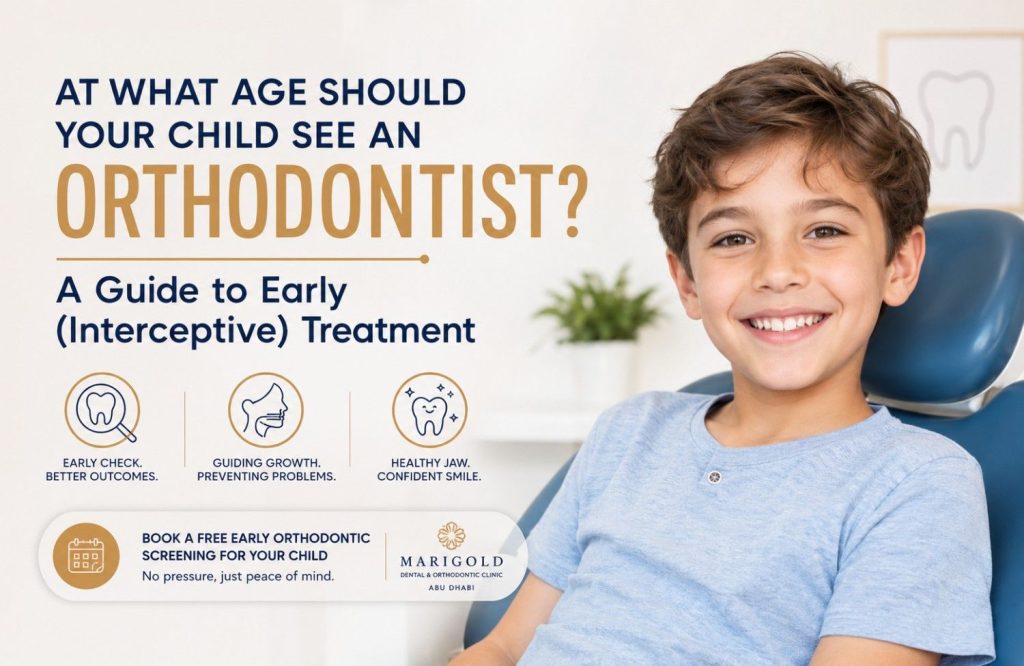
Your child’s dentist just casually mentioned “age 7” at their last cleaning — and you left the appointment wondering if that’s way too early to think about braces, or if you’re already behind. You’re not alone. Most parents assume orthodontics starts in the teen years. Here’s why that’s not quite right, and what age 7 actually means for your child.
Why Age 7 Is the “Magic Number”
By around age 7, your child usually has a mix of baby teeth and permanent teeth — just enough for an orthodontist to get a real look at how the bite and jaw are developing. It’s not too early, and it’s definitely not random.
At this age, the jaw is still soft and growing, which means small issues are much easier to guide now than to correct later. And here’s the part that surprises most parents: this first visit isn’t a commitment to treatment. In most cases, the orthodontist simply takes a look, maybe schedules a follow-up in six months to a year, and that’s it.
Signs You Shouldn’t Wait For
You don’t have to wait until exactly age 7 if something feels off sooner. A few things worth mentioning to your dentist right away:
- Mouth breathing or snoring this can actually affect how the jaw and face develop over time, not just sleep quality
- Baby teeth falling out unusually early or unusually late
- Visible crowding, gaps, or a bite where the top and bottom teeth don’t quite line up
None of these automatically mean treatment is needed. But they’re worth a professional look rather than a “let’s just wait and see.”
Thumb-Sucking Harmless Habit or Bigger Problem?
Every parent has been there. And honestly, thumb-sucking and pacifier use are completely normal up to about age 3 or 4. The concern only kicks in if the habit sticks around longer than that, especially once permanent teeth start coming in.
Here’s why: prolonged sucking habits can gradually reshape the roof of the mouth and push the front teeth forward. The good news is this isn’t scary or permanent. Orthodontists usually start with simple behavioral fixes, and only move to a small habit-breaker appliance if the habit has already started affecting the bite.
What’s the Difference Between Phase 1 and Phase 2 Orthodontic Treatment?
Phase 1 orthodontic treatment happens around ages 7–10 and focuses on guiding jaw growth and creating space for adult teeth. Phase 2 begins once most permanent teeth have erupted, usually around ages 11–13, and uses braces or aligners to fully align the smile.
The two phases work together but serve different jobs. Phase 1 is about setting up the jaw and making room not creating a perfect smile yet. Phase 2 is the stage most people picture when they hear “getting braces,” where teeth are brought into their final position.
Worth repeating: not every child needs both. Plenty of kids get checked at age 7, get the all-clear, and go straight to a single round of braces once their adult teeth are all in.
What Actually Happens at the First Visit
If you’re picturing X-rays, appliances, and a treatment plan on day one relax. A first orthodontic visit is usually quick and low-key. It’s a visual exam, an X-ray only if something needs a closer look, and a conversation about anything you’ve noticed at home.
Most of the time, the visit ends with “let’s just keep an eye on this” rather than an immediate plan. There’s no pressure, no stress for your child, and definitely no obligation.
The Bottom Line
There’s really no downside to an early orthodontic check and for some kids, it opens up options that simply won’t be there a few years down the line. If your child is around age 7, or you’ve noticed any of the signs above, it’s worth a quick look now rather than waiting.
Book a free early orthodontic screening for your child at Marigold Dental & Orthodontic Clinic in Abu Dhabi no pressure, just peace of mind.