Introduction: Why This Matters More Than You Think
If you’ve booked a dental appointment in Abu Dhabi recently, you may have been surprised to hear your dentist recommend a “deep cleaning” instead of the routine cleaning you were expecting. For many patients, this raises an immediate question: what’s the difference, and why does it cost more or take longer?
This isn’t just a matter of terminology. Choosing between a regular teeth cleaning service and a deep cleaning treatment can directly affect your gum health, the longevity of your teeth, and even your overall health — since untreated gum disease has been linked to heart disease, diabetes complications, and respiratory issues. Abu Dhabi’s climate, dietary habits (including high tea and coffee consumption), and lifestyle factors also mean that gum health issues can develop gradually without residents realizing it.
Understanding which type of cleaning your teeth actually need helps you avoid two common mistakes: paying for a deep cleaning you don’t need, or delaying treatment your gums genuinely require. This guide breaks down both procedures in plain language, so you can walk into your next appointment at a dental clinic in Abu Dhabi with confidence.
1. What Is Regular Teeth Cleaning?
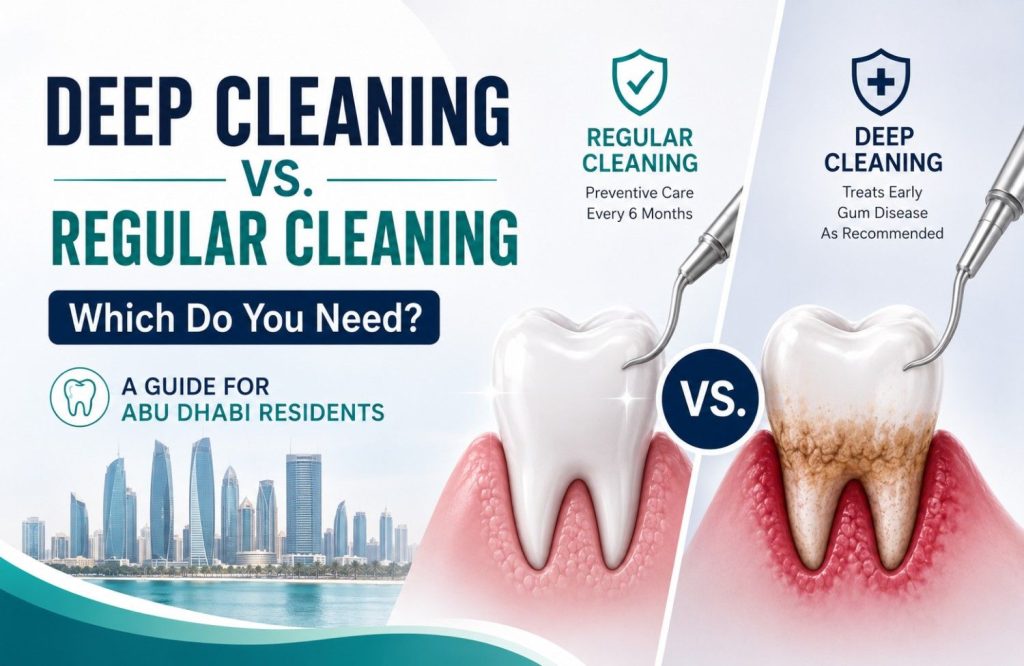
Regular cleaning — also called prophylaxis — is the routine teeth cleaning service most people are familiar with. It’s designed for patients with generally healthy gums and is typically recommended every six months as part of standard preventive dental care.
What Happens During a Regular Cleaning
- Scaling above the gumline: A dental hygienist removes plaque and tartar buildup from the visible surface of the teeth.
- Polishing: The teeth are polished to remove surface stains and create a smooth finish that resists new plaque formation.
- Flossing and fluoride treatment: Many clinics finish with flossing and a fluoride application to strengthen enamel.
Who Regular Cleaning Is For
Regular cleaning is appropriate if:
- Your gums are pink, firm, and don’t bleed during brushing
- You have no gum pockets deeper than 3mm (measured by your dentist)
- You’ve had consistent six-monthly checkups without gaps
2. What Is Deep Cleaning (Scaling and Root Planing)?
Deep cleaning, clinically known as scaling and root planing (SRP), is a more intensive procedure used when plaque and tartar have built up below the gumline, causing early to moderate gum disease (periodontitis).
What Happens During Deep Cleaning
- Scaling below the gumline: Tartar and bacteria are removed from the root surfaces, not just the visible tooth.
- Root planing: The root surfaces are smoothed to help gum tissue reattach to the tooth and prevent bacteria from collecting again.
- Local anesthesia: Because the treatment reaches below the gumline, numbing is usually applied, and treatment is often split across two visits, one for each side of the mouth.
Who Needs Deep Cleaning
Your dentist may recommend deep cleaning if you show:
- Gum pockets measuring 4mm or deeper
- Persistent bleeding or swelling of the gums
- Visible gum recession or tooth mobility
- Bad breath that doesn’t resolve with regular hygiene
3. Key Differences: Deep Cleaning vs. Regular Cleaning
| Aspect | Regular Cleaning | Deep Cleaning |
|---|---|---|
| Target area | Above the gumline | Above and below the gumline |
| Purpose | Preventive maintenance | Treating early gum disease |
| Number of visits | Usually one | Often two (upper/lower or quadrant-based) |
| Anesthesia | Not required | Local anesthesia typically used |
| Recovery time | None | Mild soreness for 1–2 days |
| Frequency | Every 6 months | As recommended, then maintenance cleanings |
The core distinction comes down to gum pocket depth and the presence of periodontal disease. Your dentist will use a periodontal probe to measure pocket depth around each tooth — this single measurement usually determines which category of teeth cleaning service applies to you.
4. How to Know Which One You Need
You don’t have to guess. Here are the signs that typically point toward each option:
Signs You Likely Need Regular Cleaning
- No bleeding when brushing or flossing
- No noticeable bad breath
- Consistent six-month dental visits
- Gums appear tight and pink, not puffy or red
Signs You May Need Deep Cleaning
- Gums bleed easily, even with gentle brushing
- Teeth feel slightly loose or shifted
- Gums appear red, swollen, or receding
- You’ve gone more than a year without a professional cleaning
- Chronic bad breath despite good home care
If you’re unsure, the safest step is a dental checkup where pocket depths can be measured. Many Abu Dhabi dental clinics, including Marigold Dental, offer a comprehensive oral assessment before recommending either procedure, so you aren’t paying for treatment you don’t need.
5. What Happens If You Skip the Cleaning You Actually Need
Choosing the wrong path or avoiding treatment altogether carries real consequences:
If You Skip Deep Cleaning When You Need It
Untreated gum disease progresses in stages. Early gingivitis can advance to periodontitis, where the supporting bone around teeth begins to break down. This can eventually lead to tooth loss and has been associated with increased risk for cardiovascular issues.
If You Get Deep Cleaning When You Only Needed Regular Cleaning
This is less harmful but still worth avoiding — it means unnecessary cost and a longer, more uncomfortable procedure than your gums actually required. This is exactly why an accurate diagnosis matters more than defaulting to the more “thorough-sounding” option.
Practical example: A patient in Yas Island who ignored early gum bleeding for over a year returned to find pocket depths had progressed from 3mm to 5mm, requiring not just deep cleaning but a follow-up periodontal maintenance plan every three months instead of the standard six.
Conclusion: Your Next Step
The difference between deep cleaning and regular cleaning isn’t about which sounds more serious — it’s about what your gums specifically need, based on pocket depth, plaque location, and signs of gum disease. Regular cleaning maintains healthy gums; deep cleaning treats early gum disease before it progresses further.
If you’re unsure which category applies to you, the best next step is a professional dental assessment rather than guessing based on symptoms alone. A qualified dental hygienist can measure your gum pockets in minutes and recommend the right teeth cleaning service for your specific situation — whether that’s a routine six-month cleaning or a more targeted scaling and root planing treatment.
Ready to find out which cleaning your teeth need? Book a dental assessment with Marigold Dental and orthodontist service in Abu Dhabi and get a clear, personalized recommendation from an experienced dental team.