A single dental implant in Abu Dhabi costs between AED 3,500 and AED 12,000. That range isn’t imprecision. It reflects genuinely different clinical situations, different materials, and different amounts of work. Two patients sitting in the same waiting room on the same day can leave with quotes that differ by AED 6,000, both of them accurate.
What determines where a specific case lands in that range is what this piece covers.
What a Single Implant Actually Consists Of
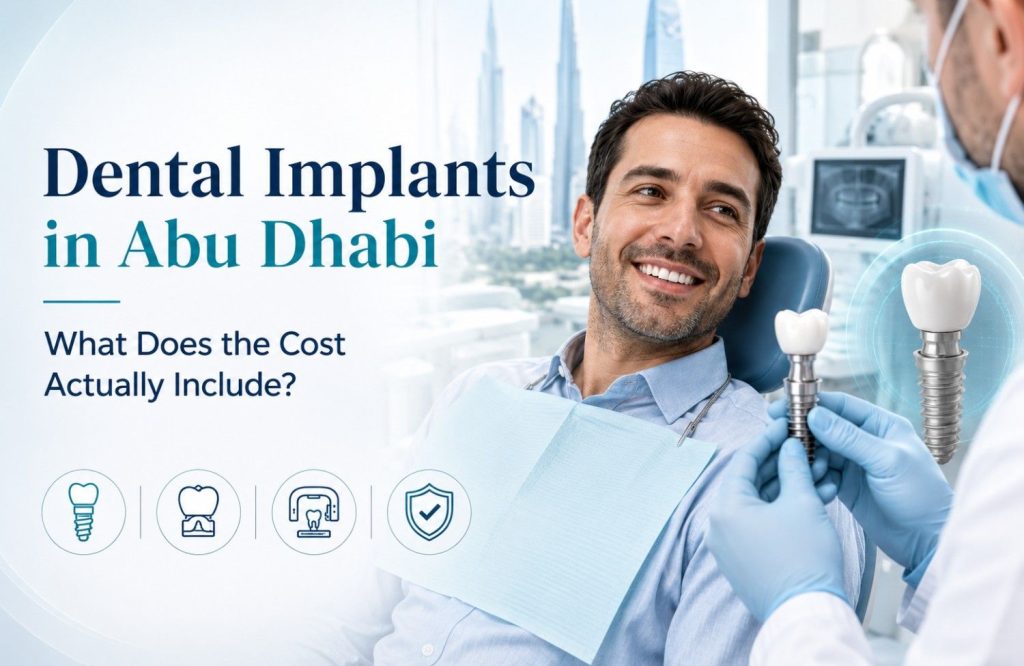
An implant is three separate components, not one. Understanding that changes how a quote reads.
The implant post is a titanium fixture placed surgically into the jawbone. Over three to six months, bone grows around it in a process called osseointegration. The post brand matters here in a specific way: established implant systems from manufacturers with extensive clinical research behind them, Nobel Biocare, Straumann, Osstem among the most widely used in Abu Dhabi, carry different price points and different documented survival rates. That gap between systems is clinically significant, not cosmetic.
The abutment connects the post to the crown above it. Its fit at the gum line affects both aesthetics and long-term tissue health around the restoration. A poorly fitted abutment creates marginal gaps. Those gaps accumulate bacteria.
The crown is the visible tooth. Material selection follows the same clinical logic as any crown decision: zirconia performs differently from E-Max, which performs differently from PFM, depending on the tooth’s position, the bite load it carries, and what the aesthetic requirements are. The crown material component of an implant quote is explained in detail in [Different Types of Dental Crowns Explained](link to crowns blog).
Why Two Quotes for the Same Treatment Can Differ by Thousands
Five variables drive most of the variation.
Implant system. The post itself varies in price depending on manufacturer, surface treatment technology, and the clinical data supporting it. A system with twenty-year survival data costs more than one without it. That difference is what the price gap between a AED 3,500 quote and an AED 8,000 quote frequently reflects.
Crown material. Zirconia, E-Max, and PFM sit at different price points. The clinically indicated material depends on the tooth’s position and functional demand, not on which option is cheaper.
Placement complexity. A straightforward posterior implant into adequate bone is a different procedure from an anterior implant where positioning precision, soft tissue management, and aesthetic outcome all require additional planning and clinical time.
Imaging. Cone beam CT scanning provides the three-dimensional bone map needed for accurate placement. Some clinics include it in the quoted figure. Others price it separately. A quote without imaging specified warrants a direct question.
Surgeon experience. An oral surgeon or periodontist with a dedicated implant practice has a different fee structure from a general dentist placing occasional cases. That difference reflects training depth, case volume, and the complication management that concentrated experience builds.
When the Quote Gets More Complex
A patient who lost a tooth a year ago and didn’t replace it has likely experienced some degree of bone resorption at that site. The jaw requires stimulation from a tooth root to maintain its density. Without it, bone volume reduces progressively, as covered specifically in [Dental Implants vs Dentures: A Long-Term Solution Comparison](link to implants vs dentures blog).
When remaining bone volume is insufficient for implant placement, grafting is required. Socket preservation after extraction, ridge augmentation for significant bone loss, sinus lifting for upper posterior implants: each adds to the total cost and extends the treatment timeline. A quote that includes bone grafting isn’t a more expensive clinic. It’s a more honest assessment of what the case actually requires.
A quote that doesn’t mention grafting for a site with documented resorption is worth questioning directly.
How to Read an Implant Quote
A detailed quote specifies the implant system by name, the crown material, whether imaging is included, the number of appointments covered, and whether a bone assessment has been done. A single number without that breakdown isn’t enough information to evaluate.
Four questions worth asking before accepting any quote:
- Which implant system is being used and what clinical data supports it?
- Has bone volume been assessed and is grafting likely?
- Is cone beam CT imaging included or additional?
- Does the quoted figure cover all appointments from placement to final crown?
The Longer View on Cost
The upfront figure is higher than alternatives. Across ten to twenty years, the comparison shifts. Dentures require relining, eventual replacement, and the bone loss that continues beneath them compounds the clinical situation progressively. An implant placed now into adequate bone is a different economic proposition from one placed after years of resorption have required grafting to make it viable. The grafting cost, the extended timeline, and the increased complexity all reflect what the delay produced.
Insurance coverage varies considerably by plan. Thiqa, Daman, AXA, ADNIC, and NAS each have different structures for implant components. Confirming what applies before treatment planning is practical rather than optional.
What a Phone Quote Can’t Tell You
A phone quote is a range. A clinical assessment with imaging, bone evaluation, and a specific treatment plan is an actual number for an actual case. The distance between the two is the clinical picture of the patient’s specific situation.
A dental implant consultation at Marigold Dental Abu Dhabi covers the full picture: imaging, bone assessment, component specification, and a detailed quote. That’s where the range becomes specific.
Questions Patients Ask
Why do implant quotes in Abu Dhabi vary so much?
The implant system, crown material, whether imaging is included, bone grafting requirements, and the clinician’s experience level all contribute independently. Two quotes can differ by thousands of dirhams while describing clinically different treatments.
Does UAE insurance cover dental implants?
Coverage varies by plan and provider. Some plans cover partial costs of specific components. Confirming with the insurer before treatment planning gives a clearer picture of the actual out-of-pocket figure.
What if there isn’t enough bone for an implant?
Bone grafting restores the volume needed for placement in most cases. The type required depends on the extent of resorption. It adds to the timeline and cost but makes placement possible in sites that wouldn’t otherwise support it.
How long does the full process take?
Three to six months from placement to final crown in straightforward cases. Cases requiring grafting beforehand add three to six months. The timeline reflects osseointegration, not appointment frequency.